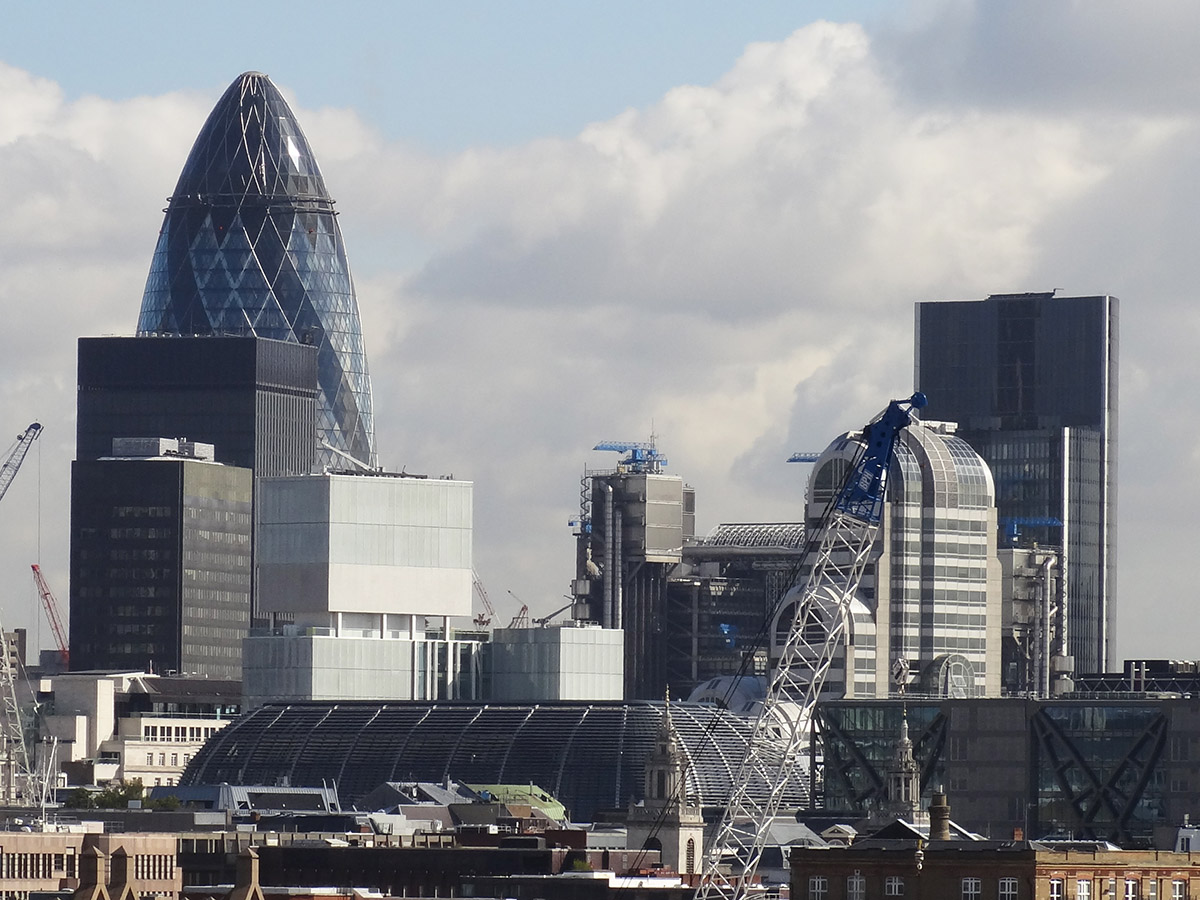
 Global merger and acquisition deals with a combined value of £2.7 trillion ($4.06 trillion) have taken place so far this year (1 Jan to 3 Nov). This is a 38% increase on the same period in 2014 ($2.94 trillion) and even surpasses the previous record high for the same period in 2007 ($3.93 trillion) (see the chart from the Dealogic article linked below).
Measured by dollar value, October was the fifth biggest month in Mergers and Acquisitions (M&As) history with the announcement of $514bn of actual or proposed deals. These included:
|
|
| • |
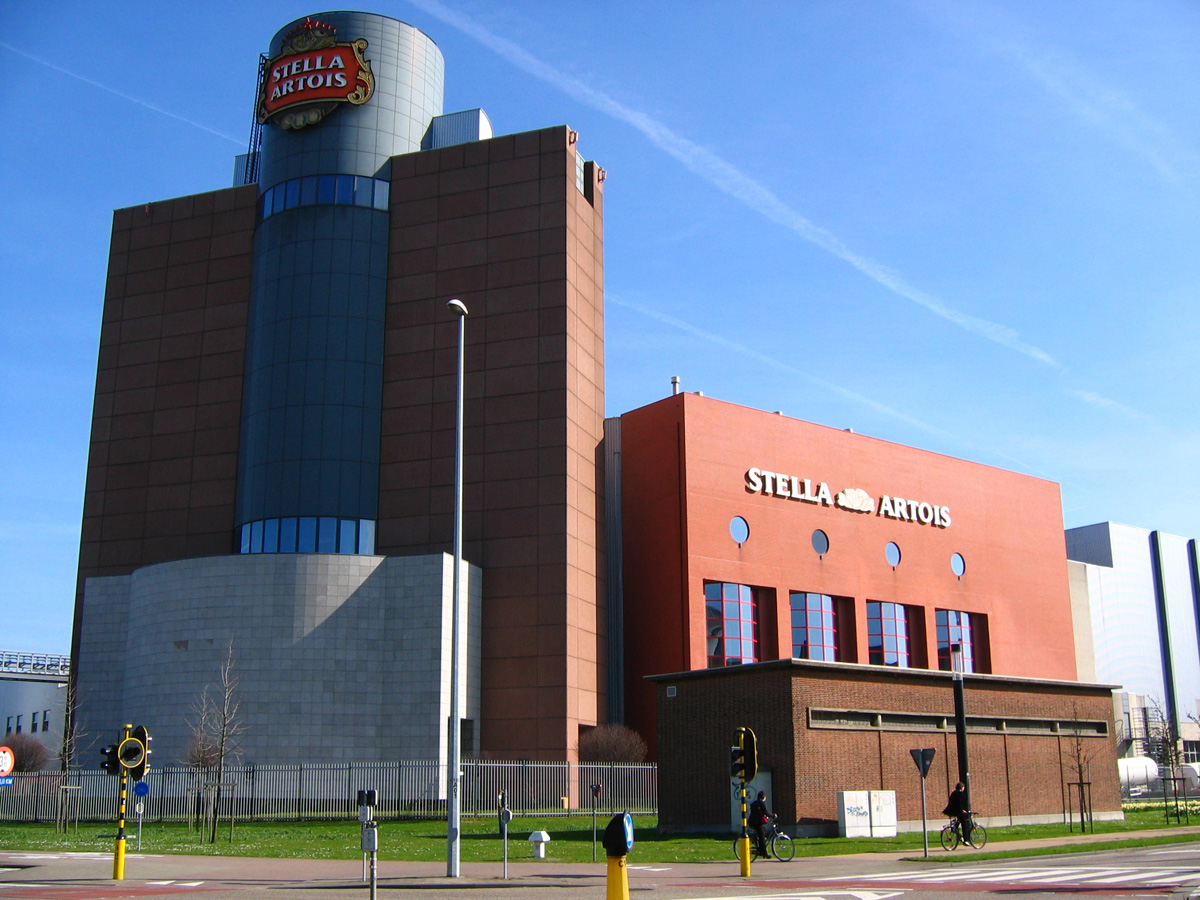
the proposed £71 billion deal to acquire SABMiller (the world’s second largest brewer) by AB InBev (the world’s largest brewer); |
| • |
the $67bn takeover of network storage provider EMC by Dell (the world’s third largest computer supplier); |
| • |
the proposed deal to acquire Allergan (producer of Botox) by Pfizer (the producer of Viagra). |
Although the dollar value of M&As was extremely large in October the actual number of deals, 2177, was significantly lower than the average of 3521 over the previous 9 months.
Are these large M&As in the interests of the consumer? One advantage is that the newly combined firms may have lower average costs. Reports in the press, following the announcement of most M&As, often discuss the potential for reductions in duplicate resources and rationalisation. After the successful completion of a takeover two previously separate departments, such as finance, law or HRM, may be combined into one office. If the newly integrated department is (i) smaller than the previous two departments added together and (ii) can operate just as effectively, then average costs will fall. This is simply an example of an economy of scale.
Average costs will also decrease if x-inefficiency within the acquired business can be reduced or eliminated. X-inefficiency exists when an organisation incurs higher costs than are necessary to produce any given output. In other words it is not producing in the cheapest possible way. In a number of takeovers in the brewing industry, AB InBev has gained a fearsome reputation for minimising costs and removing any waste or slack in acquired organisations. In an interview with the Financial Times, its chief executive, Carlos Brito, stated that:
“In any company, there’s 20 per cent that lead, 70 per cent that follow and 10 per cent that do nothing. So the 10 per cent, of course, you need to get rid of.”
If any reduction in costs results in lower prices without any lessening in the quality of the good or service, then of course the customer will benefit. However, when two relatively large organisations combine, it may result in a newly merged business with considerable market power. With a fall in the price elasticity of demand for its goods and services, this bigger company may be able to increase its prices and make greater revenues.
An important responsibility of a taxpayer-funded competition authority is to make judgements about whether or not large M&As are in the public interest. For example, the Competition and Markets Authority in the UK investigates deals if the target company has a UK turnover that exceeds £70 million, or if the newly combined business has a market share that is equal to or exceeds 25 per cent. If the CMA concludes that an M&A would lead to a substantial lessening of competition in the market, then it could prohibit the deal from taking place. This has only happened on 9 occasions in the last 12 years. If competition concerns are identified, it is far more likely that CMA will allow the deal to go ahead but with certain conditions attached. This has happened 29 times in the last 12 years and the conditions are referred to as remedies.
The CMA has recently published a report (Understanding past merger remedies) that attempts to evaluate the relative success of the various remedies it has used in 13 M&A cases.
Articles
Are big mergers bad for consumers? BBC News, Daniel Thomas (30/10/15)
Mergers and acquisitions madness may be about to stop The Guardian (11/10/15)
M&A deal activity on pace for record year The Wall Street Journal, Dana Mattioli and Dan Strumpf (10/08/15) [Note: if you can’t see the full article, try clearing cookies (Ctrl+Shift+Delete)]
Global M&A Volume Surpasses $4tr in 2015 YTD Dealogic, Anthony Read (04/11/15)
M&A Volumes Weaken in October despite Megadeals Financial Times, James Fontanella-Khan and Arash Massoudi (01/11/15)
The merger of Dell and EMC is further proof that the IT industry is remaking itself The Economist (12/10/15)
Questions
- Using a cost curve diagram, explain the difference between economies of scale and x-efficiency.
- Explain why a takeover or merger might reduce the price elasticity of demand for the goods or services produced by the newly combined firm.
- Explain how the CMA determines the size of the appropriate market when calculating a firm’s market share.
- Draw a diagram to illustrate the simultaneous impact of greater market power and lower average costs that might result from a horizontal merger. Consider the impact on consumer, producer and total surplus.
- What is the difference between a structural and a behavioural remedy?
 The proposed $100 billion takeover of SABMiller by AB InBev is the third largest in history. It provides a good example of how the UK Panel on Takeovers and Mergers operates.
Economics textbooks often discuss competition authorities such as the Competition and Markets Authority but they rarely mention the UK Panel on Takeovers and Mergers (The Panel).The Panel is an independent body that was established in 1968. It has up to 35 members who all have professional expertise on the subject of takeovers i.e. they are usually employees of or have been seconded from (i) law and accountancy firms (ii) corporate brokers (iii) investment banks.
The Panel’s main responsibility is to implement the City Code on Takeovers and Mergers. This code sets out a number of ground-rules that companies must follow if they are involved in a merger or takeover. These rules became statutory in 2006 following the Companies Act of that year. The following objectives underpin the code:
|
|
| • |
To ensure that the shareholders of the target company in a proposed takeover are treated fairly and are given the opportunity to make an informed decision about the relative merits of the takeover. |
| • |
To ensure that the whole takeover/merger process operates in a structured and systematic manner. |
The Panel does not make any judgements on the commercial case for the takeover or merger. This is left to the management and shareholders of the companies involved. It also does not get involved with competition issues such as whether the newly established firm would have significant market power. These decisions in the UK are left to the Competition and Markets Authority. If the merger has a European element/dimension to it then it is investigated by the European Commission.
The rules that made up the code remained largely unchanged from 1968 until some important changes were made in September 2011. This followed the controversial takeover of Cadbury by the US food company Kraft. Kraft had first announced its intention to make an offer to acquire Cadbury in September 2009 but a deal was not agreed by the management of Cadbury until January 2010. Concerns were expressed at the time that this long and protracted takeover had made it very difficult for Cadbury to run its business effectively because of the uncertainty it created. It was also argued that the rules gave the acquiring company a significant tactical advantage in the takeover process and made it too easy for them to succeed.
One important change is that a targeted company must publicly announce the name of any companies that have made an approach about a possible deal. This announcement then activates a 28 day bid deadline period known as ‘pusu’ which stands for ‘put up’ (the money: i.e. make a formal bid) or ‘shut up’ (and walk away). This means that if the potential acquirer has not made a formal bid by the end of this 28-day period it is prohibited from making a bid for another 6 months. A request can be made to the Takeover Panel for an extension to this initial 28-day period, but this can only be done with the agreement of the target company.
Therefore SABMiller was obliged to announce on 15th September 2015 that
“Anheuser-Busch InBev SA/NV (AB InBev) has informed SABMiller that it intends to make a proposal to acquire SABMiller. No proposal has yet been received and the Board of SABMiller has no further details about the terms of any such proposal.”
The timing of this announcement made 14th October the official deadline by which AB InBev had to make a formal offer. After rejecting five bids, an offer of £44 a share by AB InBev was agreed in principle by the SABMiller management team on 13th October.  Given the size and complexity of the deal (i.e. AB InBev is financing the deal by borrowing over $70 billion from 21 different banks), an initial two-week extension until 28th October was granted by the Takeover Panel. This could only have been granted with the agreement of SABMiller. Another one-week extension was agreed and then, on 4th November, SABMiller management made the following announcement.
“In order to allow SABMiller and AB InBev to finalise their discussions and satisfy the pre-conditions to the announcement of a formal transaction, the board of SABMiller has requested that the Panel on Takeovers and Mergers further extends the relevant deadline until 5pm November 11, 2015.”
One major issue has been the potential impact of the takeover on the level of competition in the US market. AB InBev and SABMiller already have market shares of 46% and 27% respectively. SABMiller’s strong presence in this market is a result of its joint venture, MillerCoors, with Molson Coors. One reason behind the last request for an extension is to grant enough time for a deal to be finalised for the sale of SABMiller’s 58% stake in MillerCoors to Molson Coors. Without this sale the US competition authorities would not approve the takeover.
Most observers believe that it will take a year for the deal to be completed and it will be interesting to chart its progress over the next 12 months.
Postscript: AB InBev announced on 11th November that it had made a formal offer of £71 billion to acquire SABMiller and SABMiller’s share in MillerCoors had been sold to Molson Coors for $12 billion.
SABMiller to seek another Takeover Panel extension for AB InBev takeover The Telegraph, Ben Martin (04/11/15)
AB InBev and SABMiller allay concerns about 68bn MegaBrew deal The Telegraph, Ben Martin (28/10/15)
AB InBev, SABMiller extend takeover deadline to Nov.4 Reuters, Philip Blenkinsop (28/10/15)
SABMiller agrees AB Inbev takeover deal of £68bn The Guardian, Sean Farrell (13/10/15)
SABMiller is AB Inbev’s toughest takeover yet. It may not be its last The Economist (14/10/15)
Brewery Battle: AB Inbev and the Craft Beer Challenge BBC News, Peter Shadbolt (13/10/15)
Beer Giants AB Inbev and SABMiller Agree Takeover Terms BBC News (13/10/15)
Questions
- The proposed takeover of SABMiller by AB InBev would be the third largest in history. What are the two biggest deals?
- The European Commission investigates ‘large’ mergers that have an ‘EU dimension’. On what basis does the European Commission judge if a merger is large or has an EU dimension?
- On what basis are mergers judged by the Competition and Markets Authority in the UK?
- What is a ‘virtual bid’ period? How did the ‘pusu’ bid deadline operate before the changes were introduced in 2011?
- Pfizer’s bid for Astrazeneca did not succeed in May 2014. Some people blamed the collapse of the deal on the 28-day ‘pusu’ deadline and rule 2.5 (i) of the code. What is rule 2.5 (i) and how did it contribute towards the failure of this deal?
 This rather strange question has been central to a storm that has been brewing between various celebrity chefs, including Jamie Oliver and Hugh Fearnley-Whittingstall, and the supermarkets. Supermarkets say that consumers don’t want irregular shaped vegetables, such as carrots, parsnips and potatoes. ‘Nonsense’, say their critics.
At the centre of the storm are the farmers, who find a large proportion of their vegetables are rejected by the supermarkets. And these are vegetables which are not damaged or bad – simply not of the required shape. Although these rejected vegetables have been described as ‘wonky’, in fact many are not wonky at all, but simply a little too large or too small, or too short or too long. Most of these vegetables are simply wasted – ploughed back into the ground, or at best used for animal feed.
And it’s not just shape; it’s colour too. Many producers of apples find a large proportion being rejected because they are too red or not red enough.
 But do consumers really want standardised fruit vegetables? Are the supermarkets correct? Are they responding to demand? Or are they attempting to manipulate demand?
Supermarkets claim that they are just responding to what consumers want. Their critics say that they are setting ludicrously rigid cosmetic standards which are of little concern to consumers. As Hugh Fearnley-Whittingstall states:
‘It’s only when you see the process of selection on the farm, how it has been honed and intensified, it just looks mad. There are many factory line systems where you have people looking for faults on the production line; in this system you’re looking for the good ones.
What we’re asking supermarkets to do is to relax their cosmetic standards for the vegetables that all get bagged up and sold together. It’s about slipping a few more of the not-so-perfect ones into the bag.’
In return, consumers must be prepared to let the supermarkets know that they are against these cosmetic standards and are perfectly happy to buy slightly more irregular fruit and vegetables. Indeed, this is beginning to happen through social media. 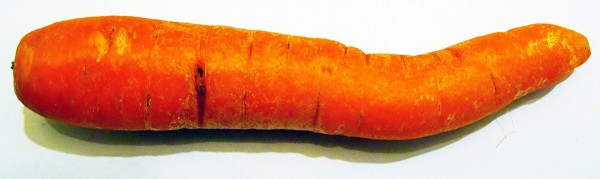 The pressure group 38 degrees has already taken up the cause.
But perhaps consumers ‘voting with their feet’ is what will change supermarkets’ behaviour. With the rise of small independent greengrocers, many from Eastern Europe, there is now intense competition in the fruit and vegetables market in many towns and cities. Perhaps supermarkets will be forced to sell slightly less cosmetically ‘perfect’ produce at a lower price to meet this competition.
Videos
 Hugh’s War on Waste Episode 1 BBC on YouTube, Hugh Fearnley-Whittingstall (2/11/15)
Hugh’s War on Waste Episode 2 BBC on YouTube, Hugh Fearnley-Whittingstall (9/11/15)
Articles
Hugh Fearnley-Whittingstall rejects Morrisons’ ‘pathetic’ wonky veg trial The Guardian, Adam Vaughan (9/11/15)
Jamie Oliver leads drive to buy misshapen fruit and vegetables The Guardian, Rebecca Smithers (1/1/15)
Hugh Fearnley-Whittingstall’s war over wonky parsnips The Telegraph, Patrick Foster (30/10/15)
Asda extends ‘wonky’ fruit and veg range Resource, Edward Perchard (4/11/15)
Wearne’s last farmer shares memories and laments loss of farming community in Langport area Western Gazette, WGD Mumby (8/11/15)
Viewpoint: The rejected vegetables that aren’t even wonky BBC News Magazine (28/10/15)
Viewpoint: The supermarkets’ guilty secret about unsold food BBC News Magazine (6/11/15)
Questions
- What market failures are there is the market for fresh fruit and vegetables?
- Supermarkets are oligopsonists in the wholesale market for fruit and vegetables. What is the implication of this for (a) farmers; (b) consumers?
- Is there anything that (a) consumers and (b) the government can do to stop the waste of fruit and vegetables grown for supermarkets?
- How might supermarkets estimate the demand for fresh fruit and vegetables and its price elasticity?
- What can supermarkets do with unsold food? What incentives are there for supermarkets not to throw it away but to make good use of it?
- Could appropriate marketing persuade people to be less concerned about the appearance of fruit and vegetables? What form might this marketing take?
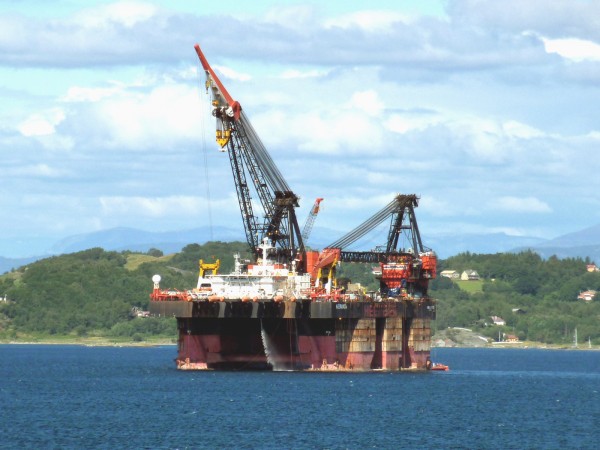 The recent low price of oil has been partly the result of faltering global demand but mainly the result of increased supply from shale oil deposits. The increased supply of shale oil has not been offset by a reduction in OPEC production. Quite the opposite: OPEC has declared that it will not cut back production even if the price of oil were to fall to $30 per barrel.
We looked at the implications for the global economy in the post, A crude indicator of the economy (Part 2). We also looked at the likely effect on oil prices over the longer term and considered what the long-run supply curve might look like. Here we examine the long-run effect on prices in more detail. In particular, we look at the arguments of two well-known commentators, Jim O’Neill and Anatole Kaletsky, both of whom have articles on the Project Syndicate site. They disagree about what will happen to oil prices and to energy markets more generally in 2015 and beyond.
Jim O’Neill argues that with shale oil production becoming unprofitable at the low prices of late 2014/early 2015, the oil price will rise. He argues that a good indicator of the long-term equilibrium price of oil is the five-year forward price, which is much less subject to speculation and is more reflective of the fundamentals of demand and supply. The five-year forward price is around $80 per barrel – a level to which O’Neill thinks oil prices are heading.
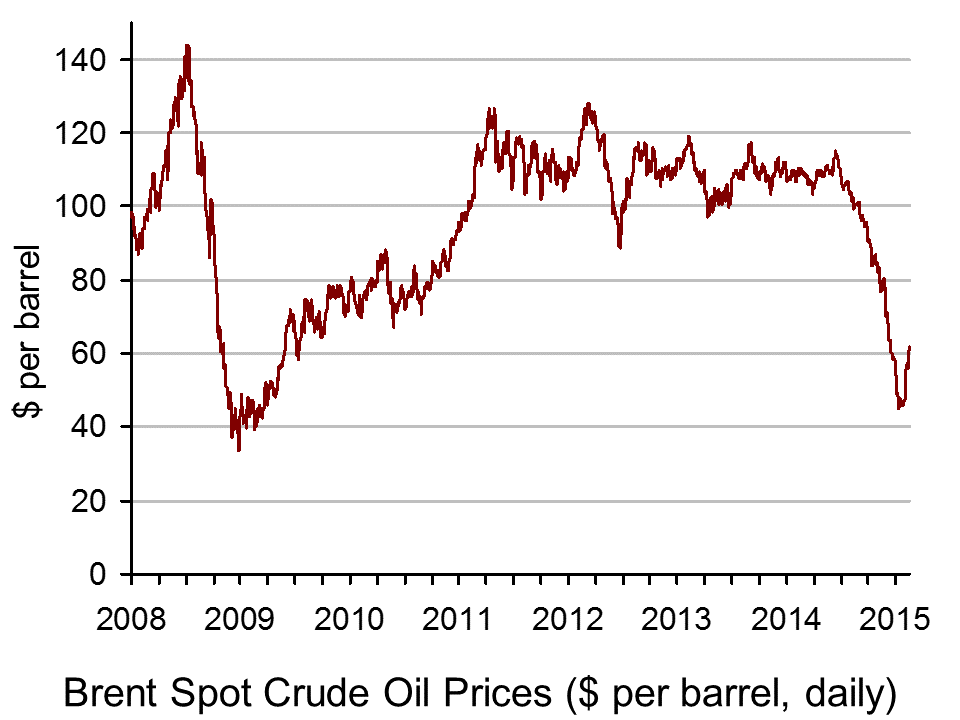 Anatole Kaletsky disagrees. He sees $50 per barrel as a more likely long-term equilibrium price. He argues that new sources of oil have made the oil market much more competitive. The OPEC cartel no longer has the market power it had from the mid 1970s to the mid 1980s and from the mid 2000s, when surging Chinese demand temporarily created a global oil shortage and strengthened OPEC’s control of prices. Instead, the current situation is more like the period from 1986 to 2004 when North Sea and Alaskan oil development undermined OPEC’s power and made the oil market much more competitive.
Kaletsky argues that in a competitive market, price will equal the marginal cost of the highest cost producer necessary to balance demand and supply. The highest cost producers in this case are the shale oil producers in the USA. As he says:
Under this competitive logic, the marginal cost of US shale oil would become a ceiling for global oil prices, whereas the costs of relatively remote and marginal conventional oilfields in OPEC and Russia would set a floor. As it happens, estimates of shale-oil production costs are mostly around $50, while marginal conventional oilfields generally break even at around $20. Thus, the trading range in the brave new world of competitive oil should be roughly $20 to $50.
So who is right? Well, we will know in twelve months or more! But, in the meantime, try to use economic analysis to judge the arguments by answering the questions below.
The Price of Oil in 2015 Project Syndicate, Jim O’Neill (7/1/15)
A New Ceiling for Oil Prices Project Syndicate, Anatole Kaletsky (14/1/15)
Questions
- For what reasons might the five-year forward price of oil be (a) a good indicator and (b) a poor indicator of the long-term price of oil?
- Under O’Neill’s analysis, what would the long-term supply curve of oil look like?
- Are shale oil producers price takers? Explain.
- Draw a diagram showing the marginal and average cost curves of a swing shale oil producer. Put values on the vertical axis to demonstrate Kaletsky’s arguments. Also put average and marginal revenue on the diagram and show the amount of profit at the maximum-profit point.
- Why are shale oil producers likely to have much higher long-run average costs than short-run variable costs? How does this affect Kaletsky’s arguments?
- Under Kaletsky’s analysis, what would the long-term supply curve of oil look like?
- Criticise Kaletsky’s arguments from O’Neill’s point of view.
- Criticise O’Neill’s arguments from Kaletsky’s point of view.
- Will OPEC’s policy of not cutting back production help to restore its position of market power?
- Why might the fall in the oil price below $50 in early 2015 represent ‘overshooting’? Why does overshooting often occur in volatile markets?
 The market structure in which firms operate has important implications for prices, products, suppliers and profits. In competitive markets, we expect to see low prices, many firms competing with new innovations and firm behavior that is in, or at least not against the public interest. As a firm becomes dominant in a market, its behavior is likely to change and consumers and suppliers can be adversely affected. Is this the case with Amazon?
Much attention has been given to the dispute centering around Amazon and its actions in the market for e-books, where it holds close to two thirds of the market share. Critics of Amazon suggest that this is just one example of Amazon using its monopoly power to exploit consumers and suppliers, including the publishers and their authors. Although Amazon is not breaking any laws, there are suggestions that its behavior is ‘brutal’ and is taking advantage of consumers, suppliers and its workforce.
But rather than criticizing the actions of a monopolist like Amazon, should we instead be praising the company and its ability to compete other firms out of the market? One of the main reasons why consumers use Amazon to buy goods is that prices are cheap. So, in this respect, perhaps Amazon is not acting against consumers’ interests, as under a monopoly we typically expect low output and high prices, relative to a model of perfect competition. The question of the methods used to keep prices so low is another matter. Two conflicting views on Amazon can be seen from Annie Lowrey and Franklin Foer, who respectively said:
“Amazon relentlessly drives down prices for goods and services and delivers them fast and cheap. It ploughs its profits into price cuts and innovation rather than putting them in the hands of its investors. That benefits millions of families – full stop.”
“In effect, we’ve been thrust back 100 years to a time when the law was not up to the task of protecting the threats to democracy posed by monopoly; a time when the new nature of the corporation demanded a significant revision of government.”
So, with Amazon we have an interesting case of a monopolist, where many aspects of its behaviour fit exactly into the mould of the traditional monopolist. But, some of the outcomes we observe indicate a more competitive market. Paul Krugman has been relatively blunt in his opinion that Amazon’s dominance is bad for America. His comments are timely, given the recognition for Jean Tirole’s work in considering the problems faced when trying to regulate any firm that has significant market power. He has been awarded the Nobel Prize in Economics. I’ll leave you to decide where you place this company on the traditional spectrum of market structures, as you read the following articles.
Amazon: Monopoly or capitalist success story? BBC News, Kierran Petersen (14/10/14)
Why the Justice Department won’t go after Amazon, even though Paul Krugman thinks it’s hurting America Business Insider, Erin Fuchs (20/10/14)
Is Amazon a monopoly? The Week, Sergio Hernandez (19/11/14)
Big, bad Amazon The Economist (20/10/14)
Questions
- What are the typical characteristics of a monopoly? To what extent does Amazon fit into this market structure?
- Why does Paul Krugman suggest that Amazon is hurting America?
- How does Amazon’s behaviour with regard to (a) its suppliers and (b) its workers affect its profitability? Would it be able to behave in this way if it were a smaller company?
- Why is Amazon able to charge its customers such low prices? Why does it do this, given its market power?
- Is there an argument for more regulation of firms with such dominance in a market, as is the case with Amazon?
- The debate over e-books is ingoing. What is the argument for publishers to be able to set a minimum price? What is the argument against this?
- Should customers boycott Amazon in a protest over the alleged working conditions of Amazon factory employees?
 Global merger and acquisition deals with a combined value of £2.7 trillion ($4.06 trillion) have taken place so far this year (1 Jan to 3 Nov). This is a 38% increase on the same period in 2014 ($2.94 trillion) and even surpasses the previous record high for the same period in 2007 ($3.93 trillion) (see the chart from the Dealogic article linked below).