 In June 2014, the Gas and Electricity Markets Authority (which governs the energy regulator, Ofgem) referred Great Britain’s retail and wholesale gas and electricity markets to the Competition and Markets Authority (CMA). The market is dominated by the ‘big six‘ energy companies (British Gas, EDF, E.ON, npower, Scottish Power and SSE) and Ofgem suspected that this oligopoly was distorting competition and leading to higher prices.
The CMA presented its report on 10 March 2016. It confirmed its preliminary findings of July and December 2015 “that there are features of the markets for the supply of energy in Great Britain that result in an adverse effect on competition”. It concludes that “the average customer could save over £300 by switching to a cheaper deal” and that “customers could have been paying about £1.7 billion a year more than they would in a competitive market”.
 It made various recommendations to address the problem. These include “requiring the largest suppliers to provide fuller information on their financial performance” and strengthening the role of Ofgem.
Also the CMA wants to encourage more people to switch to cheaper suppliers. At present, some 70% of the customers of the big six are on default standard variable tariffs, which are more expensive than other tariffs available. To address this problem, the CMA proposes the setting up of “an Ofgem-controlled database which will allow rival suppliers to contact domestic and microbusiness customers who have been stuck on their supplier’s default tariff for 3 years or more with better deals.”
Another area of concern for the CMA is the 4 million people (16% of customers) forced to have pre-payment meters. These tend to be customers with poor credit records, who also tend to be on low incomes. Such customers are paying more for their gas and electricity and yet have little opportunity to switch to cheaper alternatives.  For these customers the CMA proposed imposing transitional price controls from no later than April 2017 until 2020. These would cut typical bills by some £80 to £90 per year. In the meantime, the CMA would seek to remove “restrictions on the ability of new suppliers to compete for prepayment customers and reduce barriers such as debt issues that make it difficult for such customers to switch”.
Despite trying to address the problem of lack of competition, consumer inertia and barriers to entry, the CMA has been criticised for not going further. It has also been criticised for the method it has chosen to help consumers switch to cheaper alternative suppliers and tariffs. The articles below look at these criticisms.
Podcast
 Competition and Markets Authority Energy Report BBC You and Yours (10/3/16)
Articles
Millions could see cut in energy bills BBC News (10/3/16)
Shake-up of energy market could save customers millions, watchdog says The Telegraph, Jillian Ambrose (10/3/16)
UK watchdog divided over energy market reforms Financial Times, Kiran Stacey (10/3/16)
How the CMA energy inquiry affects you Which? (10/3/16)
UK watchdog accused of bowing to pressure from ‘big six’ energy suppliers The Guardian, Terry Macalister (10/3/16)
CMA documents
CMA sets out energy market changes CMA press release (10/3/16)
Energy Market Investigation: Summary of provisional remedies Competition and Markets Authority (10/3/16)
Questions
- Find out the market share of the ‘big six’ and whether this has changed over the past few years.
- What, if any, are the barriers to entry in the gas and electricity retail markets?
- Why are the big six able to charge customers some £300 per household more than would be the case if they were on the cheapest deal?
- What criticisms have been made of the CMA’s proposals?
- Discuss alternative proposals to those of the CMA for dealing with the problem of excessive prices of gas and electricity.
- Should Ofgem or another independent not-for-profit body be allowed to run its own price comparison and switching service? Would this be better than the CMA’s proposal for allowing competitors access to people’s energy usage after 3 years of being with the same company on its standard tariff and allowing them to contact these people?
 Many of the major industries in Australia are oligopolies/oligopsonies. Examples include banking, telecoms, supermarkets, insurance and iron ore. The dominant firms in these markets have been accused of exploiting their market power, both in charging high prices to consumers and driving down the prices paid to suppliers. The result, it is claimed, is that they have been making excessive profits.
But things may be changing. With the rise of online trading, barriers to entry in these markets have been falling. Many of the new entrants are established firms in other countries and hence already have economies of scale.
The first article below examines the challenge to established oligopolists in Australia.
Articles and blogs
The death of the oligopoly: Australia’s incumbents face new rivals Financial Review (Australia), Michael Smith (21/4/15)
Australian Oligopolies The Grapevine, Adam Dimech (27/12/14)
Paper
Breaking up Australia’s oligopolies Ashurst Australia (14/8/13)
Questions
- Find out which are the major firms in Australia in the five industries identified above. What is their market share and how has this been changing?
- What barriers to entry exist in each of these industries in Australia? To what extent have they been declining?
- What can new entrants do to overcome the barriers to entry?
- What technological developments allow other companies to challenge Foxtel’s pay television monopoly?
- To what extent are developments in the supermarket industry in Australia similar to those in the UK?
- To what extent does Australia benefit from increased globalisation?
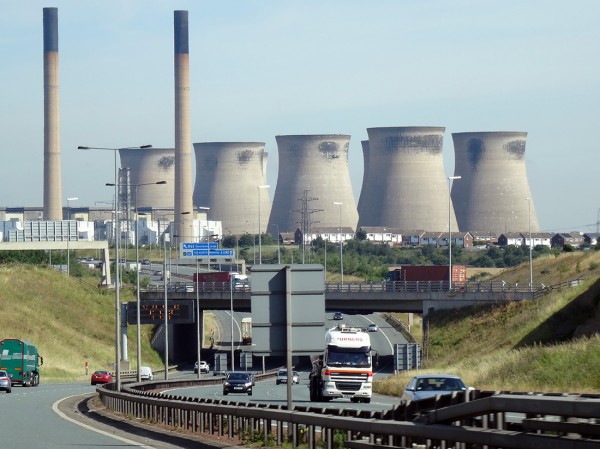 Over 90% of UK households buy their gas and electricity from one of the ‘big six’ energy suppliers – British Gas (Centrica), EDF, E.ON, npower (RWE), Scottish Power (Iberdrola) and SSE. The big six are currently being investigated by the Competition and Markets Authority (CMA) for possible breach of a dominant market position.
An updated ‘issues statement‘ summarises the investigation group’s initial thinking based on the evidence it has received. In paragraph 16 it states:
Comparing all available domestic tariffs – including those offered by the independent suppliers – we calculate that, over the period Quarter 1 2012 to Quarter 2 2014, over 95% of the dual fuel customers of the Six Large Energy Firms could have saved by switching tariff and/or supplier and that the average saving available to these customers was between £158 and £234 a year (depending on the supplier).
 Between 40% and 50% of customers have been with a supplier for more than 10 years. The companies are thus accused of exploiting these ‘loyalty’ customers, many of whom are too busy or ill-informed to switch to an alternative supplier. According to the uSwitch article below:
This is a particular issue for the most vulnerable of customers, including the elderly, who view switching as ‘impossible’.
But the elderly were not the only consumers losing out; the CMA found that those customers most likely to be on expensive standard tariffs were less educated, or on lower incomes, or single parents, and did not necessarily have access to the Internet.
And the problem of penalising ‘loyalty’ customers who do not shop around applies in other industries, most notably banking. People who regularly switch savings accounts can get higher interest rates, often for a temporary ‘introductory’ period. Similarly, people who regularly transfer credit card debt from one card to another can take advantage of low interest rate, or even zero interest rate, deals for an introductory period.
Returning to the energy industry. Is the problem one of oligopoly? Do the big six have too much market power and, if so, what can be done about it? Should they be split up? Should regulation be tightened? Should new entrants be encouraged and, if so, what specific measures can be taken? The following articles explore the issues and possible policies.
Articles
British energy customers missed out on savings Reuters, Nina Chestney (18/2/15)
U.K. Energy Customers Could Save by Shopping Around: CMA BloombergBusiness, Aoife White (18/2/15)
Big six energy firms overcharging customers by up to £234 a year The Guardian, Sean Farrell (18/1/15)
Big six energy firms may lose quarter of customers by 2020, analysts warn The Guardian, Terry Macalister (1/10/14)
UK watchdog says big energy groups do not enjoy unfair advantage Financial Times, Michael Kavanagh (18/2/15)
CMA energy market investigation update: millions are punished for being loyal uSwitch, Lauren Vasquez (19/2/15)
Gas and electricity bills – the key questions Channel 4 News (18/2/15)
Energy customers miss big savings, says CMA inquiry BBC News, John Moylan (18/2/15)
Big Six energy companies overcharging loyal customers by up to £234 a year says watchdog Independent, Simon Read (18/2/15)
Consumer groups demand change after ‘Big Six’ accused of penalising customers out of hundreds of pounds Independent, Simon Read (19/2/15)
Energy companies’ loyalty problem lights the way forward The Conversation, Bridget Woodman (19/2/15)
CMA press releases and reports
Energy market investigation – updated issues statement Competition and Markets Authority (18/2/15)
Energy market investigation Competition and Markets Authority (23/2/15)
Energy Market Investigation: Updated Issues Statement Competition and Markets Authority (18/2/15)
Questions
- What barriers to entry exist in the electricity and gas supply markets?
- Explain how the big six are practising price discrimination. What form does it take and how are the markets separated?
- Find out what tariffs are offered by each of the big six. When you have done so, reflect on how easy it was to find out the information and why so few customers switch.
- How could more people be encouraged to ‘shop around’ and switch energy suppliers?
- Explain the five theories of harm identified by the CMA. Would a rise in market share of the smaller energy suppliers adequately combat each of the five types of harm?
- In what ways may UK energy regulation be ‘a barrier to pro-competitive innovation and change’?
- What are the arguments for and against breaking up the big six?
- What are the arguments for and against electricity and gas price control?
 Virtually all manual toothbrushes sold in the UK are made by Oral B (Procter & Gamble), Colgate (Colgate-Palmolive) or Listerene Reach (Johnson & Johnson). This is a powerful oligopoly.
The manufacturers distribute toothbrushes primarily through large powerful retailers, such as supermarkets and Boots. It is difficult for new entrants to persuade these retailers to stock their product. What is more, with large advertising and marketing budgets, existing toothbrush manufacturers make it difficult for new brands to attract customers.
But one company has successfully entered the children’s section of the market when Boots 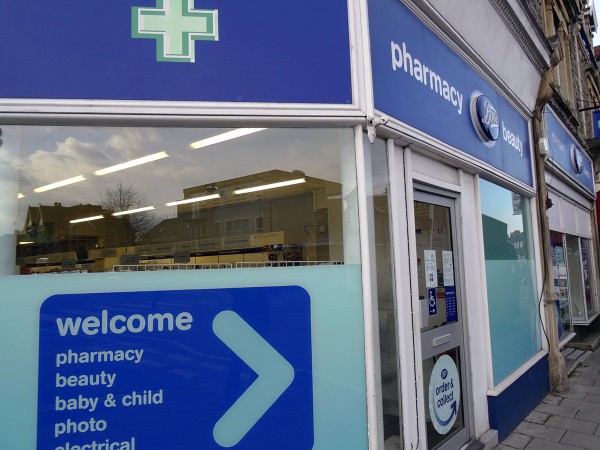 agreed to stock its product. The Rockabilly Kids toothbrush has a feature likely to appeal to both children and their parents. It wobbles! With a weight in the bottom, the brush rights itself, with a wobble, when dropped or simply placed on the basin or shelf.
This clearly appeals to small kids. It also appeals to their parents who can do away with unhygienic toothbrush holders. What is more, the self-righting wobbly toothbrush, by making the whole process of teeth cleaning fun for young kids, can help them gain good habits of oral hygiene.
So just how did the manufacturer overcome the barriers to entry into this well-established oligopoly? The following article examines how.
Can ‘wobbly’ kids toothbrushes shake the Oral B/Colgate oligopoly? The Telegraph, Rebecca Burn-Callander (10/1/15)
Questions
- What barriers to entry exist in the manual toothbrush market?
- How did Hamish Khayat overcome these barriers?
- Why did he decide against a toothbrush subscription service?
- How would you decide whether £6.99 is the right price?
- Is it a good idea for him to diversify into electric kids toothbrushes?
- How are the big toothbrush manufacturers likely to respond to the expansion of Rockabilly Kids?
 One example of an oligopoly was recently discussed on this blog –supermarkets. Here, is another classic example: the energy sector. It is dominated by six big firms, which hold the majority of the market in an industry with high barriers to entry; there is inter-dependence between the firms; and there are accusations of price fixing and collusion – all typical features of an oligopoly that may operate against consumers’ interests.
There have been numerous investigations into the actions of these energy providers, owing to their high prices, a lack of competition and significant profits. Developments in the industry have focused on reducing the barriers to entry created by the vertical integration of the incumbent firms in order to make it easier for new firms to enter, thus boosting competition.
However, the latest step is the biggest one, with the energy regulator, Ofgem, referring this industry to the Competition and Markets Authority (CMA). The investigation is likely to last 18 months and will ‘leave no stone unturned in establishing the truth behind energy prices’.
One of the key things that will be investigated is the accusation of profiteering and thus whether the big six should be broken up. This would inevitably lead to reductions in entry barriers and more opportunities for new firms to enter the market, thereby creating a much needed increase in competition. The Chief Executive of Ofgem, Dermot Nolan said:
Now is the right time to refer the energy market to the CMA for the benefit of consumers…There is near-unanimous support for a referral and the CMA investigation offers an important opportunity to clear the air. This will help rebuild consumer trust and confidence in the energy market as well as provide the certainty investors have called for.
Further comments were made about the energy sector and the future direction in terms of market reforms. This was another reason given for the referral to the CMA. Dermot Nolan added:
A CMA investigation should ensure there are no barriers to stop effective competition bearing down on prices and delivering the benefits of these changes to consumers.
The impact of this latest news will undoubtedly be felt by the big six, with share prices already taking a small hit, as investors start to look ahead to the potential outcome, despite any decision not being expected for a good 18 months. The following articles consider this latest energy market development.
Ofgem puts big six energy suppliers under CMA spotlight The Guardian, Terry Macalister (26/6/14)
Ofgem refers ‘big six’ energy groups for competition probe Financial Times, Claer Barrett (26/6/14)
U.K. energy regulator Ofgem asks for utilities probe Wall Street Journal, Selina Williams (26/6/14)
Energy probe could lead to ‘major structural change’ BBC News (26/6/14)
Probe into energy firms’ £100 per home profits The Telegraph, Emily Gosden (26/6/14)
UK competition watchdog kicks off energy suppliers probe Reuters (26/6/14)
Energy sharks may £101 profit per family: Major inquiry launched into power Mail Online, Sean Poulter (26/6/14)
Big six energy firms face full competition probe Independent, Simon Read (26/6/14)
Questions
- How well does the energy sector fit the structure of an oligopoly?
- What are the barriers to entry in the energy market? How can this referral to the CMA help to reduce them?
- Which factors determine the price of energy?
- The big six have been accused of profiteering. What is meant by this and why is it against the public interest?
- Why has it taken so long for such a referral to take place?
- In the BBC News article, the suggestion is that this investigation could lead to a ‘major structural change’. What is meant by this and why is it a possibility?
 It made various recommendations to address the problem. These include “requiring the largest suppliers to provide fuller information on their financial performance” and strengthening the role of Ofgem.
 For these customers the CMA proposed imposing transitional price controls from no later than April 2017 until 2020. These would cut typical bills by some £80 to £90 per year. In the meantime, the CMA would seek to remove “restrictions on the ability of new suppliers to compete for prepayment customers and reduce barriers such as debt issues that make it difficult for such customers to switch”.