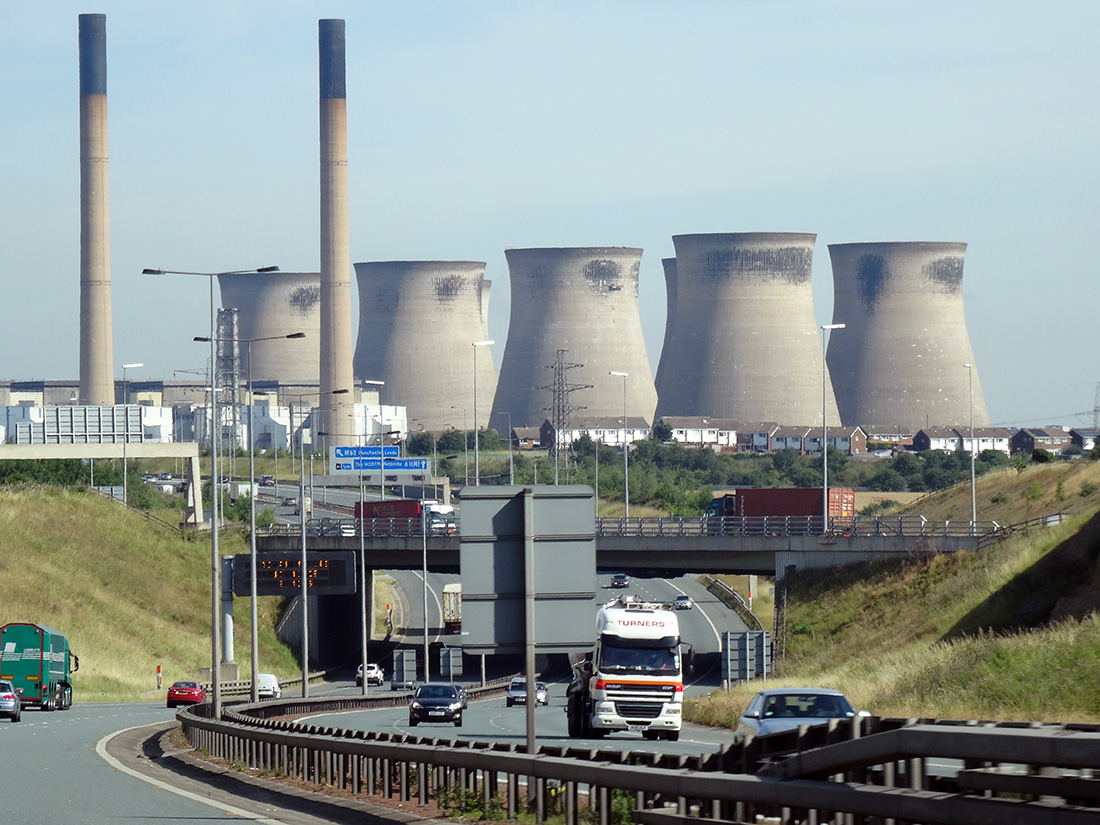
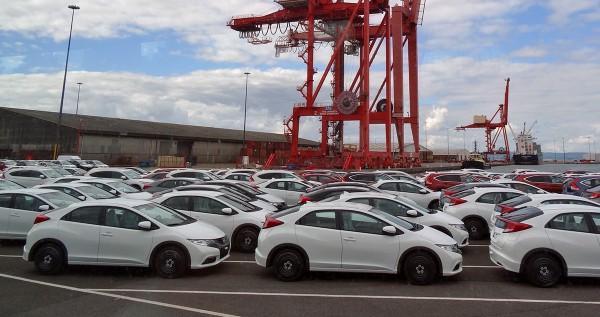
 The European Commission has recently carried out a number of investigations into the various sectors of the industry that supplies parts to car manufacturers. Firms have been found guilty of engaging in anti-competitive practices in the supply of bearings, wire harnesses and the foam used in car seats. The latest completed case relates to firms that supply alternators and starters – both important components in a car engine.
On January 27th the European Commission announced that it was imposing fines on some Japanese manufacturing companies. Melco (Mitsubishi Electric), Hitachi and Denso were found guilty of participating in a cartel between September 2004 and February 2010 that restricted competition in the supply alternators and starters to car manufacturers.
The Commission gathered evidence showing that senior managers in the three businesses held discussions about how to implement various anti-competitive practices. These either took place on the phone or at meetings in offices/restaurants. In particular the firms agreed:
|
|
| • |
to co-ordinate their responses to tenders issued by car manufacturers. This involved them agreeing on the price each firm would bid. |
| • |
to exchange commercially sensitive information about pricing and marketing strategies. |
| • |
which of them would supply each car manufacturer with alternators and starters. |
These activities are in breach of Article 101 of the Treaty on the Functioning of the European Union (2009). The European Commissioner for Competition, Margrethe Vestager, stated that:
“Today’s decision sanctions three car part producers whose collusion affected component costs for a number of car manufacturers selling cars in Europe, and ultimately European consumers buying them. If European consumers are affected by a cartel, the Commission will investigate it even if the cartel meetings took place outside of Europe”
The fines imposed on the three businesses were as follows:
– Denso €0
– Hitachi €26 860 000
– Melco €110 929 000
How are these fines calculated? When calculating the size of the fine to impose on a firm the Commission takes into account a number of factors. These include:
|
|
| • |
the size of its annual sales affected by the anti-competitive activities. |
| • |
its market share. |
| • |
the geographical area of its sales. |
| • |
how long it had taken part in the cartel. |
| • |
whether it had previously been found guilty of engaging in anti-competitive practices. |
| • |
if it initiated the cartel in the first place i.e. was it the ring leader? |
In this particular case the size of the fine imposed on both Hitachi and Melco was increased because they had both previously been found guilty of breaking EU competition rules.
If a member of the cartel comes forward with information that helps the Commission with its investigation, a reduction in the size of the fine can be applied under a provision called a Leniency Notice (2006). Timing as well as the quality of the information provided influences the size of this reduction. For example, only the first firm to come forward with relevant information can receive a reduction of up to 100% i.e. obtain full immunity. This explains how Denso could be found guilty but not have to pay a fine. (This firm’s initial approach to the Commission actually triggered the investigation.) Any subsequent firms that come forward with information receive smaller fine reductions. Hitachi and Melco received reductions of 30% and 28% respectively.
If a firm accepts the Commission’s decision a further reduction of up to 10% can be applied. This is called a Settlement Notice (2008). All three firms were awarded the full 10% discount in this case.
The European Commission is currently investigating the behaviour of firms that supply car thermal systems, seatbelts and exhaust systems.
Articles
Car parts price-fixing fines for Hitachi and Mitsubishi Electric BBC News 27/01/16
EU antitrust regulators to fine Japanese car part makers: sources Tech News 26/01/16
Mitsubishi Electric and Hitachi get $150 EU cartel fine Bloomberg 27/01/16
EU fines Mitsubishi Electric, Hitachi for car part cartel Reuters 27/1/16
Questions
- What market conditions would make the formation of a cartel more likely?
- Draw a diagram to illustrate the impact of a profit maximising cartel agreement on the price, output and profit in an industry.
- Draw a diagram to illustrate the incentive that each firm has to cheat on an agreed cartel price and output.
- Why did the European Commission introduce Settlement Notices?
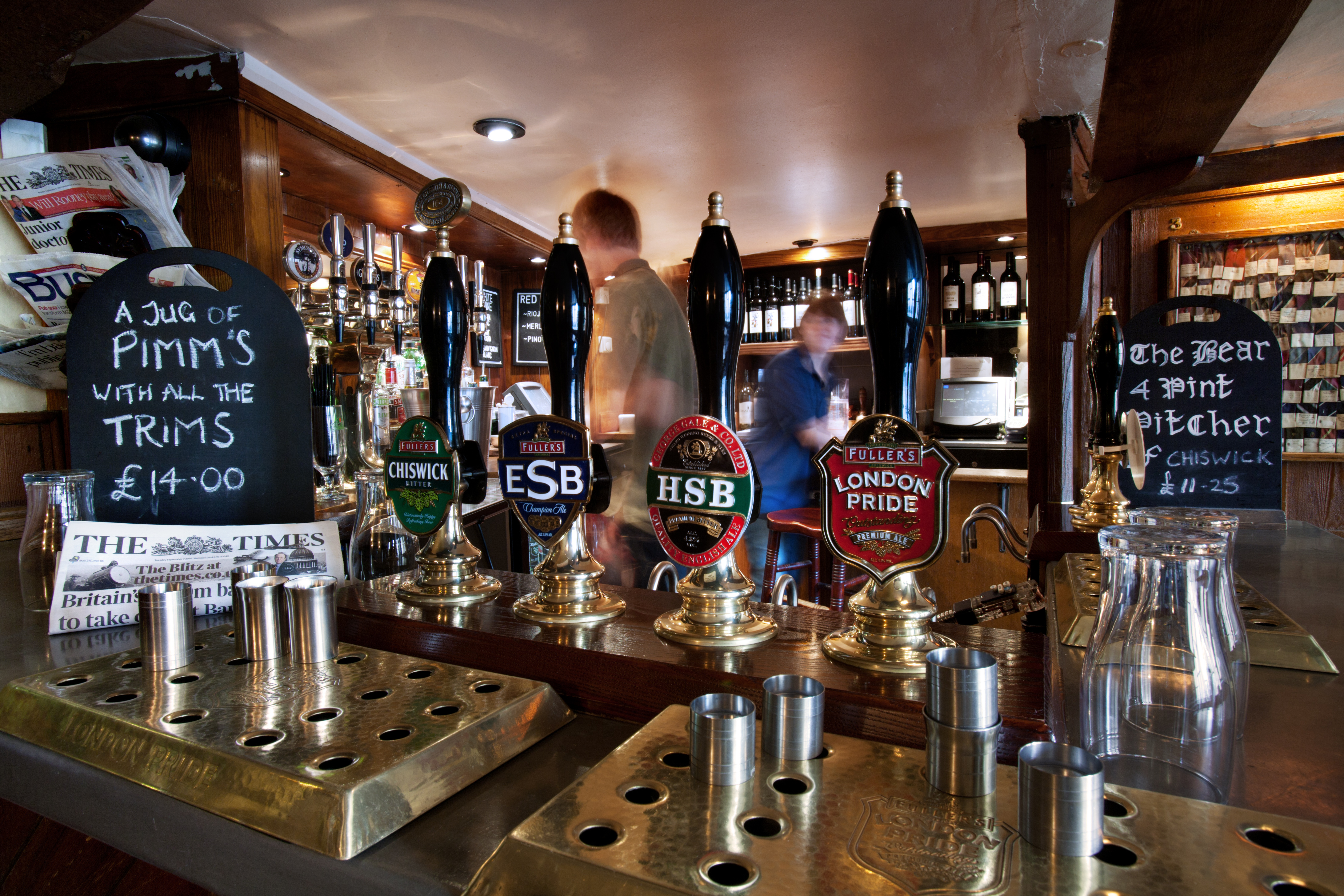
 Pubs are closing down in the UK at the rate of 29 per week. The total number has fallen from 67,000 in 1982 to approximately 52,000 this year. In response to this decline the government has recently announced some changes to the way the relationship between pub owners and their tenants are regulated.
The ownership of pubs in the UK changed dramatically after a report on the beer market was published by the Monopolies and Mergers Commission (MMC) in 1989. When this investigation took place over 75% of the beer in the UK was produced by the six largest brewing businesses (Bass, Allied Lyons, Grand Metropolitan, Whitbread, Scottish and Newcastle, Courage) which owned over half the pubs. The nature of the relationship between these breweries and the landlords of the pubs they owned caused the greatest concerns.
Some pubs are run as managed houses. In this type of business relationship the person who manages and runs the pub (the publican) is a direct employee of the brewery. However, in many instances this is not the case. Instead they are independent entrepreneurs who enter into a tenancy agreement with the owner of the pub. In other words they rent the pub from the brewery and have some freedom over the way it is run including the setting of prices.
These arrangements have proved to be very controversial because of one particular aspect of many of the tenancy agreements – the exclusive supply contract. Known as the ‘tied lease model’, ‘beer tie’ or ‘wet rent’, it significantly reduces the freedom of publicans to run the business, as they have to purchase almost all their beverages from the brewery that owns the pub.
The MMC report in 1989 concluded that a significant reason for the increasing real price of beer was the market power exerted by the brewers through the tied lease model. It recommended that the number of pubs owned and operated by the brewers should be substantially reduced. Known as the ‘Beer Orders’, the brewers responded by gradually selling off 14,000 pubs. They also eventually sold the breweries to international rivals and companies such as Whitbread and Bass moved into the retail, leisure and hotel sectors. Whitbread currently owns Costa, Brewers Fayre and Premier Inn hotels while Bass, renamed Intercontinental Hotels Groups, owns both Crown Plaza and Holiday Inn hotels.
 The beer tie between the pubs and the big national breweries might have disappeared but the tied lease arrangement still exists. Instead of being tied to national brewers, many publicans are tied to either smaller regional breweries, such as Everards and Adnams, or another type of business – the pub company known as ‘pubcos’. Some of the larger pubcos include Enterprise Inns, Punch Taverns, Mitchells&Butlers and JD Weatherspoon. They negotiate deals with the breweries and then supply the beer to their pubs.
In 2014, The British Beer and Pub Association estimated that two-fifths of pubs in the UK were owned by pubcos, while another fifth were owned by regional breweries. In 2013, The Department for Business, Innovation and Skills estimated that 48 per cent of pubs in the UK had landlords who were tied to either a regional brewer or a pub company.
The ownership of pubs may have changed radically over the past 20 years but the tied lease system continues to be extremely controversial. The main argument against the system is that it leads to tied publicans having to pay significantly above free market prices for their beer. The pubcos accept this claim but maintain that, in return for being in a tied lease, the publican pays a lower rent and receives business support services.
Parliament passed the Small Business, Enterprise and Employment Act in March 2015 (see Part 4). This included provisions for the introduction of:
|
|
| • |
a statutory Pubs Code to govern the relationship between the businesses that own the pubs and their tenants; |
| • |
a new independent Adjudicator to enforce the code; |
| • |
a Market Rent Only (MRO) option. |
In October 2015 the government announced some proposals for how the MRO option could be implemented as part of its consultation process with the industry. These include giving the tied publican the right to ask for a rent assessment every five years or whenever the owner of the pub significantly changes the beer prices it charges the tenant. As part of this rent assessment the publican can take the option to switch to an MRO contract. This gives them the freedom to purchase beer from any supplier rather than being tied to those supplied by the owner of the pub.
Enterprise Inns, the largest pubco, operates nearly all of its pubs on the tied lease model. In response to the changes proposed by the Government, the company has announced plans significantly to increase the number of its directly managed pubs from just 16 to 800.
Could the tied lease system finally be about to end?
Articles
Enterprise Inns to grow pub numbers after death of the ‘beer tie’ The Telegraph, Ben Martin, and Peter Spence (12/05/15)
What is the ‘beer tie’ The Telegraph, Denise Roland (19/11/14)
Q&A: Calling time on the beer tie BBC News, Katie Hope (19/11/14)
Chin chin! Fair deal for pub tenants under a new beer tie crackdown City AM, Suzie Neuwirth (29/10/15)
Industry Reacts to New Statutory Pubs Code Eat Out, Nathan Pearce (29/10/15)
What does new pub code mean for the leased pubs? Burton Mail, Andrew Musgrove (04/11/15)
Questions
- What has happened to the big six national brewers which once dominated the beer industry in the UK?
- What factors have caused the decline in the number of pubs?
- Using a diagram, illustrate the impact that the market power of the pubcos might have on the prices paid by publicans in a tied lease.
- Discuss some of the potential advantages of the tied lease model.
- The global brewers and pubcos might create a situation where market power exists in successive stages of the vertical supply chain. Analyse some of the potential implications of this structure and discuss the concept of double marginalisation.
 A professor in the USA recently posed an interesting dilemma to students taking his psychology exam. At the end of the exam students were provided with a bonus question in order to gain extra credit. All they had to do was decided whether they would like two or six additional marks adding on to their final score. The twist was that if more than 10% of the class opted for an additional six marks then everyone would get nothing added on!
The professor had placed the students in a prisoner’s dilemma scenario. To see this consider an individual student weighing up which option to choose; if more than 90% of the class chose two additional marks, then this student is better off choosing six additional marks. Whereas if more than 90% of the class chose six additional marks, then this student is indifferent between the two options (the student will get no additional marks regardless of their choice). It follows that choosing six additional marks is a weakly dominant strategy.
In a similar fashion, in the classic prisoners setting keeping quiet is collectively better, however, each criminal has a strong individual incentive to confess. Likewise, in oligopoly markets the interdependence between firms results in a tension between cooperation and competition. Firms collectively benefit from keeping prices high, but an individual firm has an incentive to undercut its rivals and steal a large share of the market. A strong prediction when self-interested participants play the prisoner’s dilemma game just once and choose their strategies independently is therefore that the prisoners will confess to the crime and that firms will set low prices.
So did the US professor end up giving away many bonus marks? No, about 20% of the class opted for six additional marks and as a result all the students ended up with no extra marks. In fact, the professor claims to have been running the same experiment for the previous seven years and only once has he ended up giving away any bonus marks. On the one hand, this result is consistent with what is predicted in the prisoner’s dilemma game. However, running contrary to this is the fact that around 80% of the students opted for just two additional marks. It would certainly be interesting to see what would happen if in future years the professor relaxed the threshold above which all students get no extra marks.
UMD ‘tragedy of the commons’ tweet goes viral The Baltimore Sun, Quinn Kelley (09/07/15)
A professor tested the ‘Prisoner’s Dilemma’ on his students by bribing them with extra credit points Tech Insider, Will Haskell (17/07/15)
Questions
- Draw the payoff matrix for the student’s dilemma.
- What are some of the possible explanations for around 80% of the class choosing two extra marks?
- How do you think the outcome of the game might have changed if students were allowed to communicate with each other before making their choice on the number of additional marks to ask for?
- How do you think student choices would change if the threshold above which all students get no extra marks was varied?
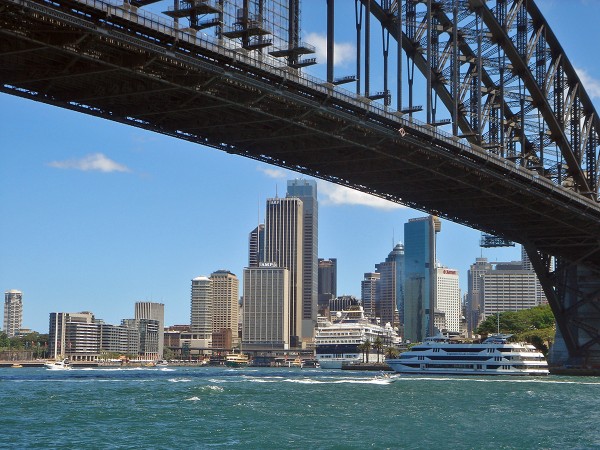 Many of the major industries in Australia are oligopolies/oligopsonies. Examples include banking, telecoms, supermarkets, insurance and iron ore. The dominant firms in these markets have been accused of exploiting their market power, both in charging high prices to consumers and driving down the prices paid to suppliers. The result, it is claimed, is that they have been making excessive profits.
But things may be changing. With the rise of online trading, barriers to entry in these markets have been falling. Many of the new entrants are established firms in other countries and hence already have economies of scale.
The first article below examines the challenge to established oligopolists in Australia.
Articles and blogs
The death of the oligopoly: Australia’s incumbents face new rivals Financial Review (Australia), Michael Smith (21/4/15)
Australian Oligopolies The Grapevine, Adam Dimech (27/12/14)
Paper
Breaking up Australia’s oligopolies Ashurst Australia (14/8/13)
Questions
- Find out which are the major firms in Australia in the five industries identified above. What is their market share and how has this been changing?
- What barriers to entry exist in each of these industries in Australia? To what extent have they been declining?
- What can new entrants do to overcome the barriers to entry?
- What technological developments allow other companies to challenge Foxtel’s pay television monopoly?
- To what extent are developments in the supermarket industry in Australia similar to those in the UK?
- To what extent does Australia benefit from increased globalisation?
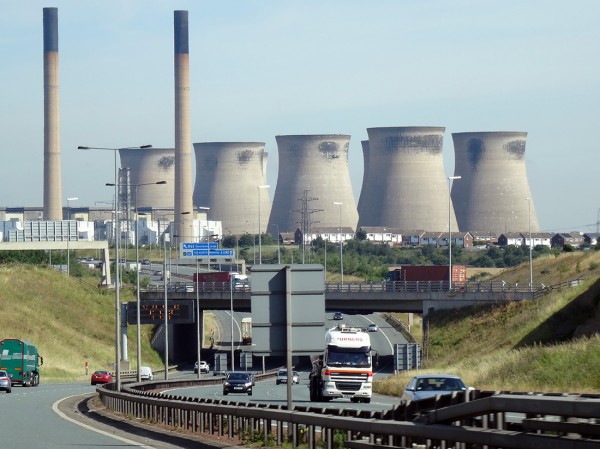 Over 90% of UK households buy their gas and electricity from one of the ‘big six’ energy suppliers – British Gas (Centrica), EDF, E.ON, npower (RWE), Scottish Power (Iberdrola) and SSE. The big six are currently being investigated by the Competition and Markets Authority (CMA) for possible breach of a dominant market position.
An updated ‘issues statement‘ summarises the investigation group’s initial thinking based on the evidence it has received. In paragraph 16 it states:
Comparing all available domestic tariffs – including those offered by the independent suppliers – we calculate that, over the period Quarter 1 2012 to Quarter 2 2014, over 95% of the dual fuel customers of the Six Large Energy Firms could have saved by switching tariff and/or supplier and that the average saving available to these customers was between £158 and £234 a year (depending on the supplier).
 Between 40% and 50% of customers have been with a supplier for more than 10 years. The companies are thus accused of exploiting these ‘loyalty’ customers, many of whom are too busy or ill-informed to switch to an alternative supplier. According to the uSwitch article below:
This is a particular issue for the most vulnerable of customers, including the elderly, who view switching as ‘impossible’.
But the elderly were not the only consumers losing out; the CMA found that those customers most likely to be on expensive standard tariffs were less educated, or on lower incomes, or single parents, and did not necessarily have access to the Internet.
And the problem of penalising ‘loyalty’ customers who do not shop around applies in other industries, most notably banking. People who regularly switch savings accounts can get higher interest rates, often for a temporary ‘introductory’ period. Similarly, people who regularly transfer credit card debt from one card to another can take advantage of low interest rate, or even zero interest rate, deals for an introductory period.
Returning to the energy industry. Is the problem one of oligopoly? Do the big six have too much market power and, if so, what can be done about it? Should they be split up? Should regulation be tightened? Should new entrants be encouraged and, if so, what specific measures can be taken? The following articles explore the issues and possible policies.
Articles
British energy customers missed out on savings Reuters, Nina Chestney (18/2/15)
U.K. Energy Customers Could Save by Shopping Around: CMA BloombergBusiness, Aoife White (18/2/15)
Big six energy firms overcharging customers by up to £234 a year The Guardian, Sean Farrell (18/1/15)
Big six energy firms may lose quarter of customers by 2020, analysts warn The Guardian, Terry Macalister (1/10/14)
UK watchdog says big energy groups do not enjoy unfair advantage Financial Times, Michael Kavanagh (18/2/15)
CMA energy market investigation update: millions are punished for being loyal uSwitch, Lauren Vasquez (19/2/15)
Gas and electricity bills – the key questions Channel 4 News (18/2/15)
Energy customers miss big savings, says CMA inquiry BBC News, John Moylan (18/2/15)
Big Six energy companies overcharging loyal customers by up to £234 a year says watchdog Independent, Simon Read (18/2/15)
Consumer groups demand change after ‘Big Six’ accused of penalising customers out of hundreds of pounds Independent, Simon Read (19/2/15)
Energy companies’ loyalty problem lights the way forward The Conversation, Bridget Woodman (19/2/15)
CMA press releases and reports
Energy market investigation – updated issues statement Competition and Markets Authority (18/2/15)
Energy market investigation Competition and Markets Authority (23/2/15)
Energy Market Investigation: Updated Issues Statement Competition and Markets Authority (18/2/15)
Questions
- What barriers to entry exist in the electricity and gas supply markets?
- Explain how the big six are practising price discrimination. What form does it take and how are the markets separated?
- Find out what tariffs are offered by each of the big six. When you have done so, reflect on how easy it was to find out the information and why so few customers switch.
- How could more people be encouraged to ‘shop around’ and switch energy suppliers?
- Explain the five theories of harm identified by the CMA. Would a rise in market share of the smaller energy suppliers adequately combat each of the five types of harm?
- In what ways may UK energy regulation be ‘a barrier to pro-competitive innovation and change’?
- What are the arguments for and against breaking up the big six?
- What are the arguments for and against electricity and gas price control?