 The first link below is to an excellent article by Noriel Roubini, Professor of Economics at New York University’s Stern School of Business. Roubini was one of the few economists to predict the 2008 financial crisis and subsequent recession. In this article he looks at the current problem of substantial deficiency of demand: in other words, where actual output is well below potential output (a negative output gap). It is no wonder, he argues, that in these circumstances central banks around the world are using unconventional monetary policies, such as virtually zero interest rates and quantitative easing (QE).
He analyses the causes of deficiency of demand, citing banks having to repair their balance sheets, governments seeking to reduce their deficits, attempts by firms to cut costs, effects of previous investment in commodity production and rising inequality.
 The second link is to an article about the prediction by the eminent fund manager, Crispin Odey, that central banks are running out of options and that the problem of over-supply will lead to a global slump and a stock market crash that will be ‘remembered in a hundred years’. Odey, like Roubini, successfully predicted the 2008 financial crisis. Today he argues that the looming ‘down cycle will cause a great deal of damage, precisely because it will happen despite the efforts of central banks to thwart it.’
I’m sorry to post this pessimistic blog and you can find other forecasters who argue that QE by the ECB will be just what is needed to stimulate economic growth in the eurozone and allow it to follow the USA and the UK into recovery. That’s the trouble with economic forecasting. Forecasts can vary enormously depending on assumptions about variables, such as future policy measures, consumer and business confidence, and political events that themselves are extremely hard to predict.
Will central banks continue to deploy QE if the global economy does falter? Will governments heed the advice of the IMF and others to ease up on deficit reduction and engage in a substantial programme of infrastructure investment? Who knows?
An Unconventional Truth Project Syndicate, Nouriel Roubini (1/2/15)
UK fund manager predicts stock market plunge during next recession The Guardian, Julia Kollewe (30/1/15)
Questions
- Explain each of the types of unconventional monetary policy identified by Roubini.
- How has a policy of deleveraging by banks affected the impact of quantitative easing on aggregate demand?
- Assume you predict that global economic growth will increase over the next two years. What reasons might you give for your prediction?
- Why have most commodity prices fallen in recent months? (In the second half of 2014, the IMF all-commodity price index fell by 28%.)
- What is likely to be the impact of falling commodity prices on global demand?
- Some neo-liberal economists had predicted that central bank policies ‘would lead to hyperinflation, the US dollar’s collapse, sky-high gold prices, and the eventual demise of fiat currencies at the hands of digital krypto-currency counterparts’. Why, according to Roubini, did the ‘root of their error lie in their confusion of cause and effect’?
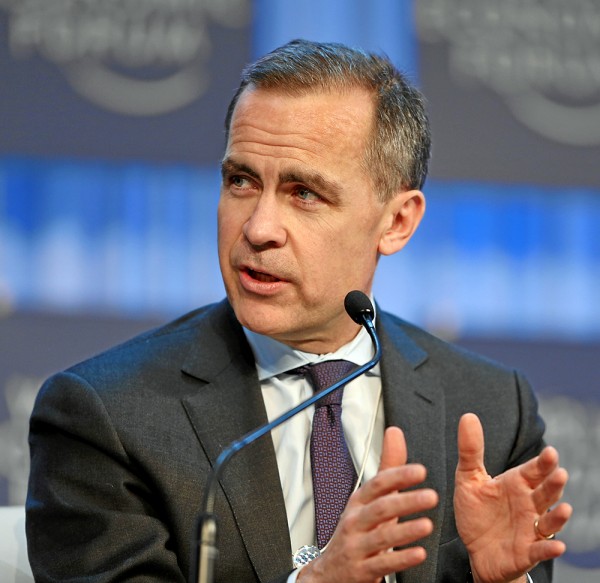 In a speech in Dublin on 28 January 2015, titled ‘Fortune favours the bold‘, Mark Carney, the Governor of the Bank of England, compared the UK economy to that of the 19-nation eurozone. While he welcomed the ECB’s recently announced quantitative easing programme, he argued that the current construction of the eurozone is unfinished and still has two fundamental weaknesses that have not been addressed.
The first is the fragmented nature of banking:
With limited cross-border banking in the euro area, savings don’t flow to potential investments. Euro-area corporates’ cash balances have risen to the tune of €420 billion, or 3% of GDP, since the crisis, for example. Modest cross-border equity flows mean inadequate risk sharing.
The second is the lack of an integrated fiscal policy.
For complete solutions to both current and potential future problems, the sharing of fiscal risks is required.
It is no coincidence that effective currency unions tend to have centralised fiscal authorities whose spending is a sizeable share of GDP – averaging over a quarter of GDP for advanced countries outside the euro area.
… If the eurozone were a country, fiscal policy would be substantially more supportive. However, it is tighter than in the UK, even though Europe still lacks other effective risk sharing mechanisms and is relatively inflexible. A more constructive fiscal policy would help recycle surplus private savings and mitigate the tail risk of stagnation. It would also bridge the drag from structural reforms on nominal spending and would be consistent with the longer term direction of travel towards greater integration.
But fiscal integration requires a political will to transfer fiscal surpluses from the stronger countries, such as Germany, to the weaker countries, such as those in southern Europe.
Overall, the financial and fiscal position in the eurozone is strong:
Gross general government debt in the euro area is roughly the same as in the UK and below the average of advanced economies. The weighted average yield on 10-year euro area sovereign debt is around 1%, compared to 1½% in the UK. And yet, the euro area’s fiscal deficit is half that in the UK. Its structural deficit, according to the IMF, is less than one third as large.
But, unlike the UK, where, despite the rhetoric of austerity, automatic fiscal stabilisers have been allowed to work and the government has accepted a much slower than planned reduction in the deficit, in the eurozone fiscal policy remains tight. Yet unemployment, at 11½%, is twice the rate in the UK and economic growth, at around 0.7% is only one-quarter of that in the UK.
Without a eurozone-wide fiscal policy the problem of slow growth is likely to persist for some time. Monetary policy in the form of QE will help and structural reforms will help to stimulate potential output and long-term growth, but these policies could be much more effective if backed up by fiscal policy.
Whether they will be any time soon is a political question.
Speech
Fortune favours the bold Bank of England. Mark Carney (29/1/15)
Articles
Bank of England’s Carney urges Europe to take plunge on fiscal union Reuters, Padraic Halpin (28/1/15)
Bank Of England’s Mark Carney Attacks ‘Timid’ Eurozone Recovery Attempts Huffington Post, Jack Sommers (29/1/15)
BoE’s Mark Carney calls for common eurozone fiscal policies Financial Times, Ferdinando Giugliano (28/1/15)
Carney attacks German austerity BBC News, Robert Peston (28/1/15)
Bank of England governor attacks eurozone austerity The Guardian, Larry Elliott (28/1/15)
Questions
- Compare the financial and fiscal positions of the UK and the eurozone.
- In what way is there a ‘debt trap’ in the eurozone?
- What did Mark Carney mean when he said, ‘Cross-border risk-sharing through the financial system has slid backwards.’?
- What options are there for the eurozone sharing fiscal risks?
- What would a ‘more constructive’ fiscal policy, as advocated by Mark Carney, look like?
- How do the fiscal policies of other currency unions, such as the UK (union of the four nations of the UK) or the USA (union of the 50 states) or Canada (union of the 10 provinces and three territories), differ from that of the eurozone?
 After Syriza’s dramatic victory in the Greek election, it is now seeking to pursue its manifesto promises of renegotiating the terms of Greece’s bailout and bringing an end to austerity policies.
The bailout of €240bn largely involved debt restructuring to give Greeks more time to pay. A ‘haircut’ (reduction) on privately held bonds, estimated to be somewhere between €50bn and €110bn, was more than offset by an increase of €130bn in loans granted by official creditors.
The terms of the bailout negotiated with the ‘Troika’ of the EU Commission, the ECB and the IMF, had forced the previous Greek government to make substantial fiscal adjustments. These have included large-scale cuts in government expenditure (including public-sector wages), increases in taxes, charges and fares, and selling state assets through an extensive programme of privatisation.
Although Greece is now regarded as having achieved a structural budget surplus (a surplus when the economy is operating at potential output: i.e. with a zero output gap),  the austerity policies and a decline in inward investment have dampened the economy so much that, until last year, the actual budget deficit and public-sector debt continued to rise as tax revenues plummeted.
Since 2007, GDP has fallen by nearly 27% and the unemployment rate is around 26%. The fall in GDP has made the achievement of a reduction in the debt/GDP ratio that much harder. General government debt has risen from 103% of GDP in 2007 to 176% in 2014, and the budget deficit, although having peaked at 12.2% of GDP in 2013, has only been brought down through huge cuts.
As a report to the European Parliament from the Economic Governance Support Unit argues on page 27:
With less front-loaded fiscal adjustment, the EU-IMF financing envelope for Greece would have needed to expand, in what is already the largest financial assistance programme in percent of GDP in recent global history. On the other hand, a less rapid fiscal adjustment may have helped to preserve some of the productive capacity that, in the course of the adjustment, was destroyed.
The new government, although pledging not to default on debt, is insistent on renegotiating the debt and wants to achieve a high level of rescheduling and debt forgiveness. As the new Prime Minister, Alexis Tsipras, says:
On existing loans, we demand repayment terms that do not cause recession and do not push the people to more despair and poverty. We are not asking for new loans; we cannot keep adding debt to the mountain.
But, just as the Greek government is insistent on renegotiating its debt, so the German government and others in the EU are insisting that Greece sticks to the terms of the bailout and carries on with its current programme of debt reduction. Another haircut, they maintain, is out of the question.
We must wait to see how the negotiations play out. We are in the realms of game theory with various possible threats and promises on either side. It will be interesting to how these threats and promises are deployed.
New Leader in Greece Now Faces Creditors New York Times, Liz Alderman (26/1/15)
Syriza’s historic win puts Greece on collision course with Europe The Guardian, Ian Traynor and Helena Smith (26/1/15)
Greece Q&A: what now for Syriza and EU austerity? The Guardian, Phillip Inman (26/1/15)
Greek elections: Syriza gives eurozone economic headache BBC News, Prof Dimitri Mardas (26/1/15)
How a Syriza government would approach the eurozone The Telegraph, Andrew Lilico (19/1/15)
Australian economists urge Greek debt forgiveness as Syriza election win looks likely ABC News, Michael Janda (26/1/15)
Will Syriza win rock the global economy? CBS News, Nick Barnets (26/1/15)
Syriza should ignore calls to be responsible Irish Times. Paul Krugman (27/1/15)
Syriza Victory in Greek Election Roils European Debate Over Austerity Wall Street Journal, Marcus Walker (25/1/14)
Greece markets hit by debt default fears BBC News (28/1/15)
Why Europe Will Cave to Greece Bloomberg, Clive Crook (29/1/15)
Greece and the euro: Take the money and run The Economist, Buttonwood (28/1/15)
Tanking markets send dire warning to Greece’s new government Fortune, Geoffrey Smith (28/1/15)
The biggest debt write-offs in the history of the world The Telegraph, Mehreen Khan (2/2/15)
Questions
- Why has Greek debt continued to rise despite extremely tight fiscal policy?
- How is the structural deficit defined? What difficulties arise in trying to measure its size?
- Would there have been any way of substantially reducing the Greek budget deficit without driving Greece into a deep recession?
- What are the arguments for and against cancelling a large proportion of Greek debt? Is there a moral hazard involved here?
- Will the recently announced ECB quantitative easing programme help to reduce Greece’s debt?
- Are negotiations about debt forgiveness a zero sum game? Explain.
- What are the likely impacts of the Syriza victory on the global economy?
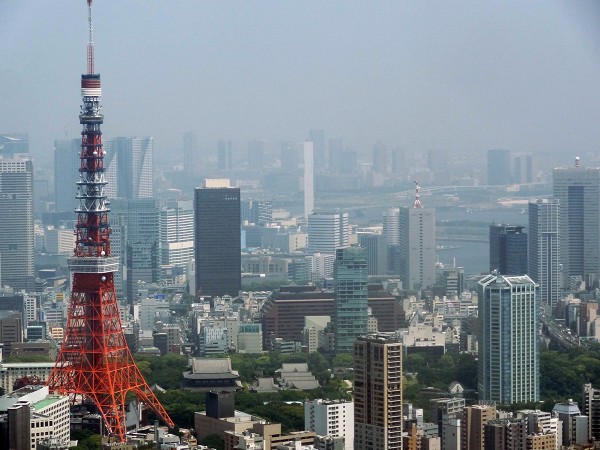 Since coming to office two years ago, Shinzo Abe’s government has been determined to revive the Japanese economy. The policy has involved ‘three arrows‘: expansionary fiscal policy, expansionary monetary policy and supply-side reforms. But figures just out show that the Japanese economy is back in recession. The economy shrank by 0.4% in quarter 3, having shrunk by 1.9% in quarter 2.
This has come as a huge disappointment for Mr Abe, who has staked his political reputation on escaping from deflation and achieving sustained economic growth. In response, he has called a general election to put a revised economic plan to the electorate.
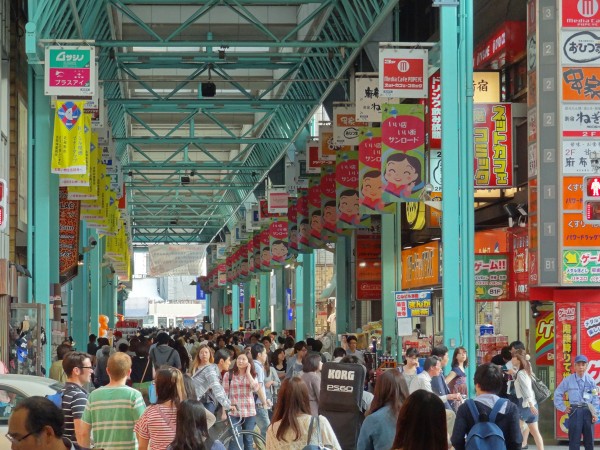
The main cause of the reversal into recession has been an increase in the sales tax on all goods, which has dampened spending. The tax rise, planned by the previous government, was to help reduce the deficit and start tackling the huge public-sector debt, which, at over 230% of GDP, is by far the highest in the developed world. Another rise in sales tax is due in October 2015 – from 8% to 10%. Mr Abe hopes to cancel the rise and it is this that he may put to the electorate.
So what is the outlook for Japan? Will quarter 4 show economic growth, or will pessimism have set in? Will the Bank of Japan introduce even more quantitative easing, or will it wait for the latest increase in QE to take effect (see the blog post, All eased out: at least for the USA and UK)?
The following articles look at the implications of the latest news, both for Japan and globally, and at the options for the government and central bank.
Articles
Japanese economy falls into surprise recession Independent, Maria Tadeo (17/11/14)
Japan’s economy makes surprise fall into recession BBC News (17/11/14)
Coming to a crunch: Time is running out for Abenomics The Economist (20/11/14)
Japan’s economy: Delay the second consumption tax hike The Economist (17/11/14)
Defying Expectations, Japan’s Economy Falls Into Recession New York Times, Jonathan Soble (16/11/14)
Japan shocks as economy slips into recession CNBC, Li Anne Wong (17/11/14)
Japan Unexpectedly Enters Recession as Abe Weighs Tax: Economy Bloomberg, Keiko Ujikane and Toru Fujioka (17/11/14)
The world should be wary: Japan’s economic woes are contagious The Guardian, Larry Elliott (17/11/14)
Why is Japan heading to the polls? BBC News (18/11/14)
Previous news items on this site
A new economic road for Japan? (January 2013)
A J-curve for Japan? (May 2013)
Japan’s three arrows (June 2013)
Abenomics – one year on (December 2013)
Japan’s recovery (January 2014)
Japan’s CPI: An Update (May 2014)
All eased out: at least for the USA and UK (November 2014)
Data
Quarterly Estimates of GDP Japanese Cabinet Office
Japan and the IMF IMF Country Reports
Economic Outlook Annex Tables OECD
Questions
- Give details of the Japanese government’s three arrows.
- Discuss the pros and cons of the rise in the sales tax. Is it possible for the rise in the sales tax to increase the size of the public-sector deficit?
- What have been the effects of Japanese government policies on (a) prices of goods and services; (b) living standards; (c) asset prices?
- Who have been the gainers and losers of the policies?
- How is the Japanese situation likely to effect the value of the yen? How is this, in turn, likely to affect its trading partners? Could this set off a chain reaction?
 The French economy is flatlining. It has just recorded the second quarter of zero economic growth, with growth averaging just 0.02% over the past 12 months. What is more, the budget deficit is rising, not falling. In April this year, the French finance minister said that the deficit would fall from 4.3% in 2013 to 3.8% in 2014 and to the eurozone ceiling of 3% in 2015. He is now predicting that it will rise this year to 4.4% and not reach the 3% target until 2017.
The deficit is rising because a flatlining economy is not generating sufficient tax revenues. What is more, expenditure on unemployment benefits and other social protection is rising as unemployment has risen, now standing at a record 10.3%.
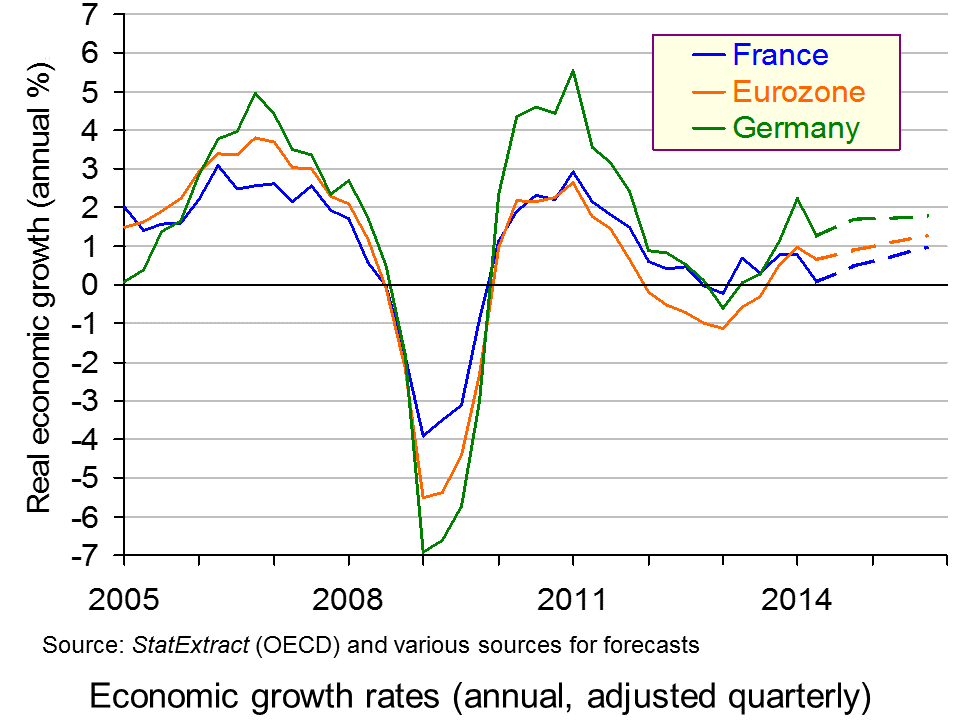
And it is not just the current economic situation that is poor; the outlook is poor too. The confidence of French companies is low and falling, and investment plans are muted. President Hollande has pledged to cut payroll taxes to help firms, but so far this has not encouraged firms to invest more.
So what can the French government do? And what can the EU as a whole do to help revive not just the French economy but most of the rest of the eurozone, which is also suffering from zero, or near zero, growth?
There are two quite different sets of remedies being proposed.

The first comes from the German government and increasingly from the French government too. This is to stick to the austerity plans: to get the deficit down; to reduce the size of government in order to prevent crowding out; and to institute market-orientated supply-side policies that are business friendly, such as reducing business regulation. Business leaders in France, who generally back this approach, have called for reducing the number of public holidays and scrapping the maximum 35-hour working week. They are also seeking reduced business taxes, financed by reducing various benefits.
Increasingly President Hollande is moving towards a more business-friendly set of policies. Under his government’s ‘Responsibility Pact’, a €40 billion package of tax breaks for business will be financed through €50 billion of cuts in public spending. To carry through these policies he has appointed an ex-investment banker, Emmanuel Macron, as economy minister. He replaces Arnaud Montebourg, who roundly criticised government austerity policy and called for policies to boost aggregate demand.
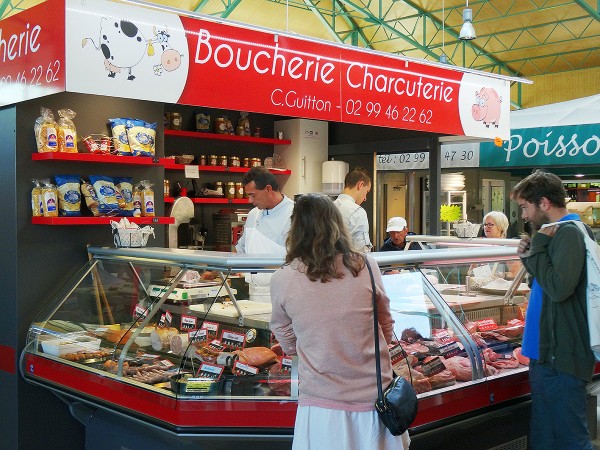
This brings us to the alternative set of remedies. These focus on stimulating aggregate demand through greater infrastructure investment and cutting taxes more generally (not just for business). The central argument is that growth must come first and that this will then generate the tax revenues and reductions in unemployment that will then allow the deficit to be brought down. Only when economic growth is firmly established should measures be taken to cut government expenditure in an attempt to reduce the structural deficit.
There are also compromise policies being proposed from the centre. These include measures to stimulate aggregate demand, mainly through tax cuts, accompanied by supply-side policies, whether market orientated or interventionist.
As Europe continues to struggle to achieve recovery, so the debate is getting harsher. Monetary policy alone may not be sufficient to bring recovery. Although the ECB has taken a number of measures to stimulate demand, so far they have been to little avail. As long as business confidence remains low, making increased liquidity available to banks at interest rates close to zero will not make banks more willing to lend to business, or businesses more willing to borrow. Calls for an end, or at least a temporary halt, to austerity are thus getting louder. At the same time, calls for sticking to austerity and tackling excessive government spending are also getting louder.
Articles
Hollande entrusts French economy to ex-banker Macron Reuters, Ingrid Melander and Jean-Baptiste Vey (26/8/14)
France’s new Minister of the Economy Emmanuel Macron described by left-wingers as a ‘copy-and-paste Tony Blair’ Independent, John Lichfield (28/8/14)
Merkel praises France’s economic reform plans after Berlin talks with PM Valls Deutsche Welle (22/9/14)
French economy flat-lines as business activity falters Reuters, Leigh Thomas (23/9/14)
French public finances: Rétropédalage The Economist (13/9/14)
French employer group urges ‘shock therapy’ for economy Reuters (24/9/14)
Last chance to save France: loosen 35-hour week and cut public holidays, say bosses The Telegraph (24/9/14)
‘Sick’ France’s economy is stricken by unemployment ‘fever’ The Telegraph (17/9/14)
France’s economics ills worsen but all remedies appear unpalatable The Observer, Larry Elliott and Anne Penketh (31/8/14)
The Fall of France The New York Times, Paul Krugman (28/8/14)
Why Europe is terrified of deflation Salon, Paul Ames (20/9/14)
Europe’s Greater Depression is worse than the 1930s The Washington Post, Matt O’Brien (14/8/14)
Worse than the 1930s: Europe’s recession is really a depression The Washington Post, Matt O’Brien (20/8/14)
Eurozone business growth slows in September, PMI survey finds BBC News (23/9/14)
Europe must ‘boost demand’ to revive economy, US warns BBC News (21/9/14)
Valls says France would never ask Germany to solve its problems Reuters, Annika Breidthardt and Michelle Martin (23/9/14)
The euro-zone economy: Asset-backed indolence The Economist (11/9/14)
Data
Annual macro-economic database (AMECO) Economic and Financial Affairs DG, European Commission
Business and Consumer Surveys Times Series Economic and Financial Affairs DG, European Commission
StatExtracts OECD
Statistics database European Central Bank
Questions
- What types of supply-side reforms would be consistent with the German government’s vision of solving Europe’s low growth problem?
- How could a Keynesian policy of reflation be consistent with getting France’s deficit down to the 3% of GDP limit as specified in the Stability and Growth Pact (see)?
- What is meant by (a) financial crowding out and (b) resource crowding out? Would reflationary fiscal policy in France lead to either form of crowding out? How would it be affected by the monetary stance of the ECB?
- Give examples of market-orientated and interventionist supply-side policies.
- What is meant by the terms ‘cyclical budget deficit’ and ‘structural budget deficit’. Could demand-side policy affect the structural deficit?
- Using the European Commission’s Business and Consumer Surveys find our what has happened to business and consumer confidence in France over the past few months.
- How important is business and consumer confidence in determining economic growth in (a) the short term and (b) the long term?