 With the financial crisis came accusations towards the banking sector that they had taken on too many bad risks. Banks were lending money on more and more risky ventures and this in part led to the credit crunch. Since then, bank lending has fallen and banks have been less and less willing to take on risky investments.
Small businesses tend to fall (rightly or wrongly) into the category of high risk and it is this sector in particular that is finding itself struggling to make much needed investments. All businesses require loans for investments and improvements and if the banking sector is unable or unwilling to lend then these improvements cannot take place.
Quantitative easing has been a key response across the world to the credit crisis to encourage banks to begin lending to each other and to customers. A new government backed scheme worth £20bn aims to increase bank lending to small and medium sized enterprises (SMEs). By guaranteeing £20bn of the participating banks’ own borrowing, lenders will be able to borrow more cheaply than normal. As the banks (so far including Barclays, Santander, RBS and Lloyds Banking Group) can borrow at a cheaper rate, they will therefore be able to pass this on to the businesses they lend to. Under this National Loan Guarantee Scheme (NLGS), businesses will be able to borrow at interests rates that are 1 percentage point lower than those outside the scheme. £5bn will initially be made available with subsequent installments each of £5bn to come later.
With the Budget looming, the Chancellor is keen to show that the government is delivering on its promise to give smaller businesses access to finance at lower interest rates. If this initiative does indeed stimulate higher lending, it may be a much needed boost for the economy’s faltering economic growth. Criticisms have been leveled at the scheme, saying that although it is a step in the right direction, it can by no means be assumed that it will be sufficient to solve all the problems. In particular, the NLGS is unlikely to provide much help for those small businesses that can’t get finance in the first place, irrespective of the cost of the borrowing. Furthermore some banks, notably HSBC, have chosen not to participate in the scheme, due to it not being commercially viable. The overall effect of this scheme will take some time be seen, but if it is effective, it could give the economy and the small business sector a much needed boost.
Banks to join credit-easing scheme Associated Press (20/3/12)
Credit easing: small businesses to get £20bn of guaranteed cheap loans Telegraph, Harry Wilson (20/3/12)
Bank lending scheme targets small businesses BBC News (20/3/12)
Move over Merlin, credit easing has arrived Independent, Ben Chu (20/3/12)
Credit easing injects £20bn into small firms Sky News (20/3/12)
UK launches small firm loan scheme, critics want more Reuters, Fiona Shaikh (20/3/12)
Osborne’s big plan: £20bn for small businesses Independent, Andrew Grice and Ben Chu (20/3/12)
George Osborne launches new scheme to boost lending to businesses Guardian, Larry Elliott (20/3/12)
Questions
- What is credit easing? Has the government’s previous credit easing had the intended effect?
- Why are small and medium sized enterprises normally seen as risky investments?
- Briefly explain the thinking behind this National Loan Guarantee Scheme.
- What are the criticisms currently levelled at this scheme? To what extent are they justified?
- Why has HSBC said that the scheme is not commercially viable for the bank?
- Explain why this scheme could provide a stimulus to the UK economy.
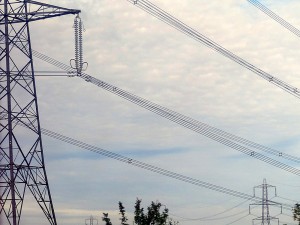 Since Labour’s historic pledge to eliminate child poverty in a generation, poverty data has been at the forefront of political debates. The recession has created unemployment and has moved more people below the poverty line, at the same time as causing rising inequality
The causes of poverty are diverse and a recent government commissioned report has drawn attention to just one of the key factors that is pushing more families into poverty – energy bills.
Fuel poverty has become more of a concern with the cost of household bills rising and this has led to calls for more money to be invested in cutting energy bills. Fuel poverty has been redefined by Professor John Hills, the author of the report, to focus on those households with a low income and also with relatively high energy bills.
Fuel poverty is undoubtedly concerning from a moral point of view – indeed, knowing that some families are unable to afford to heat their homes causes disutility for others. However, there are also wider economic implications. If families are unable to provide heating, this may adversely affect their children’s ability to learn and complete their homework, thus negatively affecting their productivity today and arguable causing further problems in their future. While this may have little effect today, the cumulative effect on economic productivity could be substantial in the long run. Inefficiency for the macroeconomy is therefore a problem, as a child’s productive potential will not be fully realized. Furthermore, there are also health concerns, as the government notes – fuel poverty is linked to 2,700 deaths per year. Again, this creates a blight on society, but it also poses economic problems, not least due to the strain on the NHS.
Fuel poverty has long been identified as a problem that needs addressing and as the Secretary of State for Energy and Climate Change said:
‘Fuel poverty is a serious national problem and this government remains committed to doing all it can to tackle it and make sure that the help available reaches those who need it most.’
Action is already taking place to insulate the poorest homes, as a means of cutting their energy bills and the government’s ‘Warm Homes Discount’ aims to provide help to the lowest income households in paying their bills. However, there are concerns that more households will move into fuel poverty, as this new definition doesn’t include those slightly wealthier households who still have high bills or the poorer households with relatively low bills. With the economy still in a vulnerable state, the latest data showing further rises in unemployment and household bills becoming increasingly expensive, the issue of fuel poverty is unlikely to disappear any time soon. The following articles consider this issue.
Fuel poverty seen for 3 million households by 2016 Reuters (16/3/12)
Fuel poverty to rise to 8.5m, report warns (including video) BBC News, Damian Kahya (15/3/12)
Nine million will live in ‘fuel poverty’ in the next four years Independent, Simon Read (16/3/12)
Fuel poverty to rise sharply Telegraph, James Hall (16/3/12)
Call for urgent action on fuel poverty Financial Times, Sarah Neville (15/3/12)
Fuel poverty worse than estimated The Press Association (15/3/12)
3 million fuel-poor households by 2016, report claims Guardian, Mark King and Zammy Fairhurst (15/3/12)
Questions
- What are the causes of poverty?
- How has the definition of fuel poverty changed? Is the change a good one? Think about the equity and efficiency of such a change.
- The BBC News article says that government measures to alleviate fuel poverty could be regressive. What is meant by this and why could this be the case?
- What are the economic consequences of fuel poverty?
- We can estimate poverty by looking at the poverty headcount or the poverty gap. What is the difference between these two measures? Which one is a more accurate measure of poverty?
- Are there any other actions that you think would be effective in alleviating fuel poverty? Would they be cost effective?
- Why does Age UK fear ‘the current proposals to improve energy efficiency through the Green Deal and energy obligation schemes are a woefully inadequate response to one of the most serious issues facing our country today’?
 The rate of inflation in the UK is measured using the Consumer Prices Index (CPI). This is made up of a basket of goods and the ONS updates this ‘basket’ each year to ensure it is representative of what the average UK household buys. The basket contains 700 items, with 180,000 individual prices collected each month.
In recent years, items such as lip gloss have been added to the basket of goods and in the latest adjustment, the ONS has added tablet computers, amongst other things. This is a market that has seen enormous growth. It has been added to the basket as a means of giving a more accurate representation of the price changes faced by the average consumer. The ONS has made it clear that items are not added simply because they are new or removed simply because spending on them has fallen.
‘In each of these cases, the item has not been added because spending has increased or because the product is new on the market … It is purely as part of the rebalancing of the basket to improve its representation of overall price change.’
It is essential that these changes are made each year, as consumer buying habits do fluctuate considerably. One area in particular has been consumer responses to changes in technology. For example, developing and printing colour film has been removed as, with the development of digital cameras, this is no longer reflective of what a representative household spends its money on. Further to this, some items that have previously been used in calculating the RPI have now been added to the CPI, again to give a clearer picture of household spending in the UK. The following articles consider what’s in and what’s out.
Teenage fiction and iPads now in official UK shopping basket Guardian, Julia Kollewe (13/3/12)
Tablet computers added to UK inflation basket BBC News (13/3/12)
 New items used to calculate inflation BBC News, Emma Simpson (23/3/12)
Tablet Computers Enter ‘Inflation Basket’ Sky News, Darren Morgan (ONS) (13/3/12)
Inflation basket of goods 2012: full list of what’s out and what’s in Guardian, Simon Rogers (13/3/12)
Tablet computers added to inflation basket of goods Telegraph (13/3/12)
How has the UK’s ‘inflation’ basket has changed? Metro, Ross McGuinness (27/3/12)
iPad and Galaxy added to inflation index Financial Times, Norma Cohen (13/3/12)
Questions
- What is the difference between the CPI and RPI? Which is usually higher? Explain your answer.
- How is the CPI calculated and hence how is inflation measured?
- What impact has technological progress had on the basket of goods that the representative household purchases? Do you think that technological progress make it more or less important for the basket of goods to be reviewed annually?
- Do you think products such as the iPad should be included in the CPI? Are they truly representative?
- In the second Guardian article, you can access a list of the products that are ‘in and out’. Is there anything on there that you think should be in or that should be out? Be sure to justify your answer!
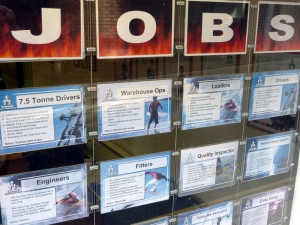 Unemployment figures for the UK have been going in the wrong direction for some time. With consumer expenditure, investment and hence aggregate demand remaining low, job creation has been severely lacking. However, 2 pieces of news have emerged in the last couple of days, which as David Cameron said was ‘a massive confidence boost for the UK economy’. Tesco and Nissan have both announced the creation of thousands of new jobs.
Over the next 2 years, Tesco has said that it will create 20,000 new jobs through store improvement and the opening of new stores. Whilst it is not clear how many will be full-time, part-time or apprenticeship placements, it still represents net job creation. This huge investment represents what many are calling a ‘fight-back’ from Tesco, who issued its first profit warning in 20 years, following weak Christmas trading. That announcement slashed their shares by over £5bn and is perhaps partly responsible for this planned investment.
Despite this good news, criticisms have emerged that the major supermarkets are simply inflating the job creation figures and that the actual number of new jobs will be significantly less than the 20,000 suggested. This follows allegations made towards Asda, who claimed to have created 30,000 jobs. However, evidence from records at Companies House suggests that new job creation by the company was closer to 7,000. Whatever the true figure, it still means new jobs, which can only help UK unemployment data.
In addition to this, Nissan has also announced that it will be creating 2,000 new jobs, as it begins production on a new model at its Sunderland factory. The jobs will be created as part of a £125m investment, including a £9.3m grant from the government. This is especially good news, given the area where many of these jobs will emerge. The North East is a region that has been hit particularly hard by the recession and the grant from the government has come from its regional growth fund. Nissan has said that even in hard economic times, it is possible to sell cars, as long as they are competitively priced. Neither of the plans discussed above will create jobs immediately, but perhaps the key is that it creates confidence, which is a rarity in the UK with the current economic situation. The following articles consider these job creation plans and their wider implications.
Tesco plans to create 20,000 UK jobs over 2 years BBC News (5/3/12)
Tesco to create 20,000 jobs in UK fight-back Telegraph, Jamie Dunkley (6/3/12)
Tesco’s UK boss defends ‘new jobs’ claims Sky News (5/3/12)
Tesco to freshen up with 20,000 new staff Financial Times, Andrea Felsted (5/3/12)
Now Tesco creates 20,000 jobs – with pay Independent (9/5/11)
Nissan to build new car in Sunderland BBC News (6/3/12)
Nissan pledges 2,000 new jobs at North East plant Sky News, Gerard Tubb (6/3/12)
Nissan Invitation compact car set to create 2,000 jobs Telegraph, Roland Gribben and David Millward (6/3/12)
Nissan to create 2,000 new jobs by building compact car in Sunderland Guardian, Dan Milmo(6/3/12)
Questions
- Explain the process by which net job creation should provide a boost to the economy.
- Will these new jobs have any impact on the government’s budget deficit?
- Why is there concern that the supermarkets are inflating the employment creation figures?
- What type of unemployment has been created by the recession? Why have certain areas, such as the North East been affected so badly by the recession and austerity measures?
- Which factors could have led to Tesco’s weaker trading figures towards then end of 2011? Why did this lead to a £5bn loss in the value of the group’s shares?
- Nissan has said that cars can be sold as long as they are competitively priced. To what extent do you think price is the main competitive weapon in the market for cars and in the supermarket industry?
 Advertising is a costly venture, but for firms in a highly competitive market it can be essential for success. During the recession, many firms had to make a variety of cut backs and reduced advertising for many was one of the key areas to go.
However, one of the leading advertising companies – WPP – has posted significant profits this year, which are up by some 18.5%, reaching £1.008bn. According to Sir Martin Sorrell, a key factor in this success is that many firms, whilst not looking to increase their market share, have felt the need to continue advertising, simply to maintain their existing market share. This has become especially important in growing markets, as competition has become more and more intense.
This new is not only good for the company in question, but also for the UK economy, as the firm has said that it will be moving its headquarters back from Ireland to the UK. This is assuming that legislation is passed concerning the taxation of profits earned abroad. If this relocation does go ahead, it could mean the creation of many more jobs in the UK and a boost to tax revenues, both of which are crucial for the UK economy. As Sir Martin Sorrell said:
‘I am delighted to say that the last remaining issues I think have been removed subject to legislation being introduced in Parliament. We will be coming back subject to shareholder approval’.
WPP believes growth throughout 2012 will be high, due to events such as the Olympics and the US Presidential elections, together with its strength in emerging economies. At the moment, this all looks like good new for the UK and oh how it’s needed!
WPP profit up ahead of 2012 Olympics boost Reuters (1/3/12)
WPP’s Martin Sorrell says he is likely to move HQ back to London Guardian, Mark Sweney (1/3/12)
Olympics, Election to boost WPP Wall Street Journal, Kathy Gordon (1/3/12)
WPP breaks £1bn profit barrier Guardian, Mark Sweney (1/3/12)
WPP boosts dividend after strong year Financial Times, Tim Bradshaw and Mark Wembridge (1/3/12)
WPP profits reach record in 2011 BBC News (1/3/12)
Questions
- What is market share and how can it be calculated?.
- What is the purpose of advertising. Using a supply and demand diagram, illustrate the effect the advertising should have. Think about the position and the shape of the curves.
- Why is advertising an area that did see cut backs throughout the recession?
- Do you think that advertising is more important for firms in growing markets? Explain your answer.
- Why did WPP relocate to Ireland and what may bring it back to the UK?
- How have WPP’s dividend payments been affected by this latest profit information?
- During a recession, competition tends to become more intense. Why is this and what role does advertising play?
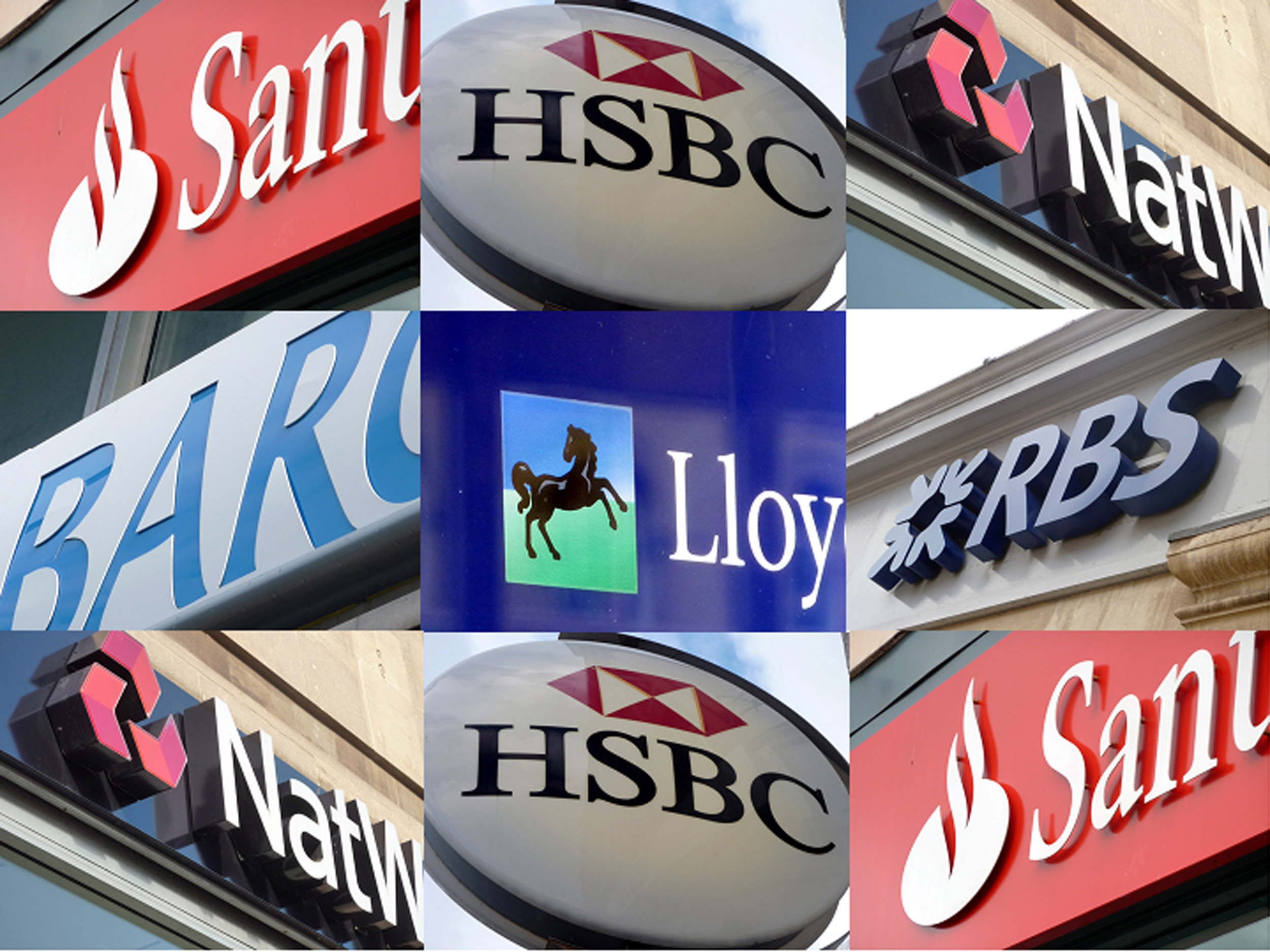 With the financial crisis came accusations towards the banking sector that they had taken on too many bad risks. Banks were lending money on more and more risky ventures and this in part led to the credit crunch. Since then, bank lending has fallen and banks have been less and less willing to take on risky investments.