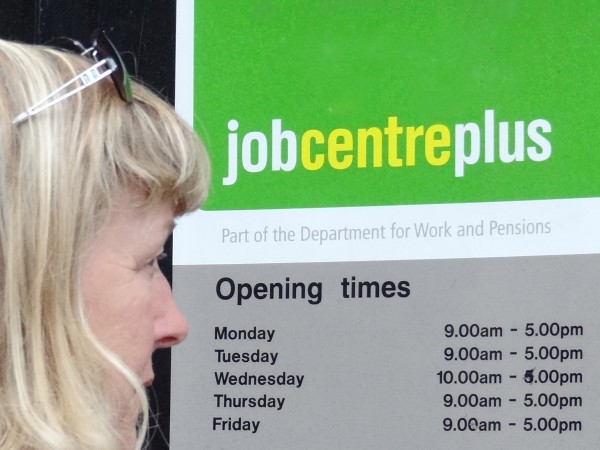
 One of the key battle grounds at the next General Election is undoubtedly going to be immigration. A topic that is very closely related to EU membership and what can be done to limit the number of people coming to the UK. One side of the argument is that immigrants coming into the UK boost growth and add to the strength of the economy. The other side is that once in the UK, immigrants don’t move into work and end up taking more from the welfare state than they give to it through taxation.
A new report produced by University College London’s Centre for Research and Analysis of Migration has found that the effect on the UK economy of immigrants from the 10 countries that joined the EU from 2004 has been positive. In the years until 2011, it has been found that these immigrants contributed £4.96 billion more in taxes than they took out in benefits and use of public services. Christian Dustmann, one of the authors of this report said:
“Our new analysis draws a positive picture of the overall fiscal contribution made by recent immigrant cohorts, particularly of immigrants arriving from the EU … European immigrants, particularly, both from the new accession countries and the rest of the European Union, make the most substantial contributions … This is mainly down to their higher average labour market participation compared with natives and their lower receipt of welfare benefits.”
 The report also found that in the 11 years to 2011, migrants from these 10 EU countries were 43 per cent less likely than native Britons to receive benefits or tax credits, and 7 per cent less likely to live in social housing. This type of data suggests a positive overall contribution from EU immigration. However, critics have said that it doesn’t paint an accurate picture. Sir Andrew Green, Chairman of Migration Watch commented on the choice of dates, saying:
“If you take all EU migration including those who arrived before 2001 what you find is this: you find by the end of the period they are making a negative contribution and increasingly so … And the reason is that if you take a group of people while they’re young fit and healthy they’re not going to be very expensive but if you take them over a longer period they will be.”
However, the report is not all positive about the effects of immigration. When considering the impact on the economy of migrants from outside of the EEA, the picture is quite different. Over the past 17 years, immigration has cost the UK economy approximately £120bn, through migrant’s greater consumption of public benefits, such as the NHS, compared to their contributions through taxation. The debate is likely to continue and this report will certainly be used by both sides of the argument as evidence that (a) no change in immigration policy is needed and (b) a major change is needed to immigration policy. The following articles consider this report.
Report
The Fiscal effects of immigration to the UK The Economic Journal, University College London’s Centre for Research and Analysis of Migration, Christian Dustmann and Tommaso Frattini (November 2014)
Articles
Immigration from outside Europe ‘cost £120 billion’ The Telegraph, David Barrett (5/11/14)
New EU members add £5bn to UK says Research BBC News (5/11/14)
UK gains £20bn from European migrants, UCL economists reveal The Guardian, Alan Travis (5/11/14)
EU immigrant tax gain revealed Mail Online (5/11/14)
Immigration question still open BBC News, Robert Peston (5/11/14)
EU migrants pay £20bn more in taxes than they receive Financial Times, Helen Warrell (5/11/14)
Questions
- Why is immigration such a political topic?
- How are UK labour markets be affected by immigration? Use a demand and supply diagram to illustrate the effect.
- Based on your answer to question 2, explain why some people are concerned about the impact of immigration on UK jobs.
- What is the economic argument in favour of allowing immigration to continue?
- What policy changes could be recommended to restrict the levels of immigration from outside the EEA, but to continue to allow immigration from EU countries?
- If EU migrants are well educated, does that have a positive or negative impact on UK workers, finances and the economy?
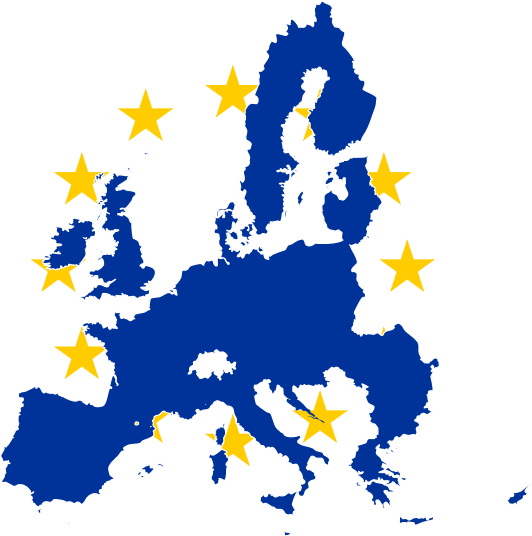 The Conservatives have pledged that, if they win the next election, they will hold a referendum in 2017 on whether or not the UK should remain in the EU. The Prime Minister has also said that he will renegotiate the terms of UK membership and push for reforms to the EU to cut administrative costs, reduce intervention and make the EU more competitive. We are likely to be bombarded with arguments for and against membership over the coming months.
In a contribution to the debate, the CBI has just published research showing that membership of the EU benefits the UK by up to £78 billion per year – £3000 per household. It also conducted a poll of its members which shows that the vast majority (78%, including 77% of SMEs) want to remain part of the EU, believing that membership brings net benefits to their business and the economy more generally.
However, as the Director-General of the CBI, John Cridland, said:
But the EU isn’t perfect and there is a growing unease about the creeping extension of EU authority. Europe has to become more open, competitive and outward looking if we are to grow and create opportunities and jobs for all our citizens.
The following articles and documents look at the CBI’s arguments.
Articles
Britain must stay in the European Union, says CBI Independent, Margareta Pagano (4/11/13)
Britain must stay in EU, says business lobby group The Guardian, Katie Allen (3/11/13)
EU membership: what the CBI have said The Telegraph, Rebecca Clancy (4/11/13)
CBI says staying in EU ‘overwhelmingly’ best for business BBC News (4/11/13)
CBI documents
In with reform or out with no influence – CBI chief makes case for EU membership CBI Press Release (4/11/13)
Our Global Future: Factsheets CBI
Questions
- Distinguish between a free trade area, a customs union, a common market and a monetary union. Which is the EU?
- Itemise the arguments for and against membership of the EU.
- What types of reform to the EU are being advocated by the CBI?
- What factors will determine the negotiating power of the UK government with other EU governments?
- How is greater fiscal integration in the eurozone likely to affect the case for and against EU membership for the UK?
 A key debate for some months has been the UK’s membership of the European Union. The debate has centred around the desire to return some powers back to the UK, but this has extended into the possibility of a referendum on our membership of the preferential trading area. So, let’s take a step back and consider why any country would want to be a member of a preferential trading area.
Preferential trading areas can be as basic as a free trading area or as advanced as a currency, or even political union. The eurozone is clearly a currency union, but the European Union, of which the UK is a member, is a common market. A common market has no tariffs and quotas between the members, but in addition there are common external tariffs and quotas. The European union also includes the free movement of labour, capital and goods and services. Membership of a preferential trading area therefore creates benefits for the member countries. One such benefit is that of trade creation. Members are able to trade under favourable terms with other members, which yields significant benefits. Countries can specialise in the production of goods/services in which they have a comparative advantage and this enables greater quantities of output to be produced and then traded.
Other benefits include the greater competition created. By engaging in trade, companies are no longer competing just with domestic firms, but with foreign firms as well. This helps to improve efficiency, cut costs and thus lower prices benefiting consumers. However, from a firm’s point of view there are also benefits: they have access to a much wider market in which they can sell their goods without facing tariffs. This creates the potential for economies of scale to be achieved. Were the UK to completely exit the EU, this could be a significant loss for domestic firms and for consumers, who would no longer see the benefits of no tariffs on imported goods. Membership of a preferential trading area also creates benefits in terms of potential technology spillovers and is likely to have a key effect on a country’s bargaining power with the rest of the world. As is a similar argument to membership of a trade union, there is power in numbers.
There are costs of membership of a preferential trading area, but they are typically outweighed by the benefits. However, estimates suggest that the cost of EU regulation is the equivalent of 10% of UK GDP. Furthermore, while the UK certainly does trade with Europe, data suggests that only 13% of our GDP is dependent on such exports. The future is uncertain for the European Union and Britain’s membership. There are numerous options available besides simply leaving this preferential trading area, but they typically have one thing in common. They will create uncertainty and this is something that markets and investors don’t like. Vince Cable warned of this, saying:
There are large numbers of potential investors in the UK, who would bring employment here, who have been warned off because of the uncertainty this is creating.
The impact of the UK’s decision will be significant and not just for those living and working in the economy. The world is no interdependent that when countries exist (or typically enter) a preferential trading area the wider economic effects are significant. While any change in the UK’s relationship with the EU will take many months and years to occur and then further time to have an effect, the uncertainty created by the suggestion of a change in the relationship has already sent waves across the world. The following articles consider the wider single market and the current debate on UK membership.
European Union: if the ‘outs’ get their way, we’ll end up like Ukraine Guardian, Vince Cable (16/5/13)
Conservative MP James Wharton champions bill to guarantee EU referendum Independent, Andrew Grice (16/5/13)
Nick Clegg shifts ground over EU referendum The Guardian, Patrick Wintour (15/5/13)
Cameron tells EU rebels to back referendum law Reuters, Peter Griffiths (16/5/13)
The EU and the UK – the single market BBC Democracy (4/3/13)
Single market dilemmas on Europe BBC News, Stephanie Flanders (14/5/13)
Lord Wolfson: I back the single market – but not at any cost The Telegraph, Lord Wolfson (19/1/13)
EU focuses on returning single market to health Financial Times, James Fontanella-Khan (8/5/13)
Questions
- What other examples of preferential trading areas are there? How close are they to the arrangement of the European Union?
- In each of the above examples, explain the type of preferential trading area that it is.
- What are the benefits and costs of being a member of a preferential trading area such as the EU? How do these differ to being a member of a) a free trade area and (b) a customs union?
- What options are open to the UK in terms of re-negotiating its relationship with the EU? In each case, explain how the benefits and costs identified in question 3 would change.
- Why is the UK’s decision so important for the global economy? Would it be in the interests of other economies? Explain your answer.
January 1st 2007 saw further enlargement of the EU with Romania and Bulgaria joining. This brings the total number of members to 27. So what will be the impact of this expansion on the EU and the new member countries? The links below offer a range of views and information on the enlargement.
Q&A: EU enlargement BBC News Online (1/1/07)
Romania and Bulgaria join the EU BBC News Online (1/1/07)
New EU citizens ‘will benefit the UK’ BBC News Online (1/1/07)
EU hardens tone on enlargement BBC News Online (15/12/06)
Bulgaria: Key facts and figures BBC News Online (21/12/06)
Romania: Key facts and figures BBC News Online (30/12/06)
Today’s European Union is 27 states in search of a story Guardian (4/1/07)
Clubbing together Guardian Blog (1/1/07)
Questions
| 1. |
What are the likely benefits to Bulgaria and Romania of membership of the EU? |
| 2. |
What are the likely costs to existing EU members of Bulgaria and Romania joining the EU? |
| 3. |
Assess the likely impact on the EU budget of Bulgaria and Romania joining the EU. |
 One of the key battle grounds at the next General Election is undoubtedly going to be immigration. A topic that is very closely related to EU membership and what can be done to limit the number of people coming to the UK. One side of the argument is that immigrants coming into the UK boost growth and add to the strength of the economy. The other side is that once in the UK, immigrants don’t move into work and end up taking more from the welfare state than they give to it through taxation.
 The report also found that in the 11 years to 2011, migrants from these 10 EU countries were 43 per cent less likely than native Britons to receive benefits or tax credits, and 7 per cent less likely to live in social housing. This type of data suggests a positive overall contribution from EU immigration. However, critics have said that it doesn’t paint an accurate picture. Sir Andrew Green, Chairman of Migration Watch commented on the choice of dates, saying: