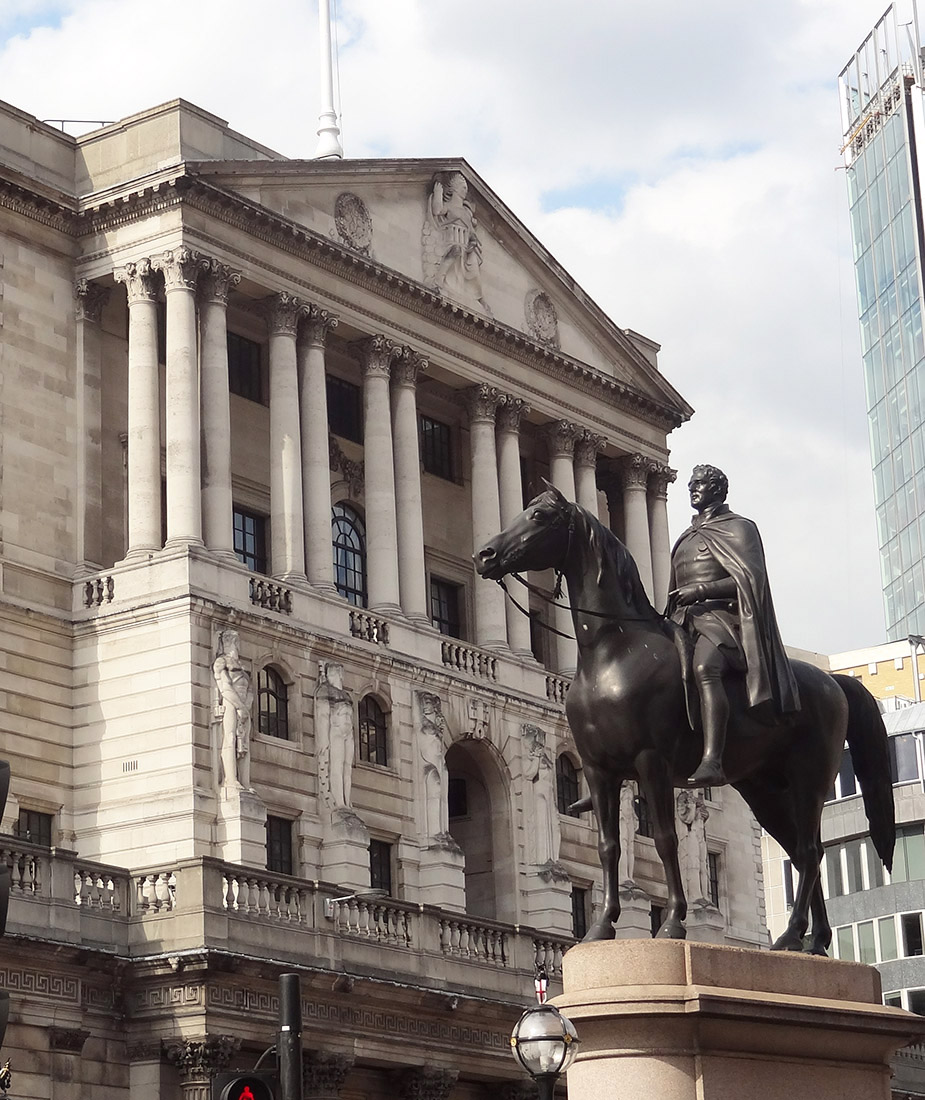
 In a previous blog, Anyone got a crystal ball?, we reported on the Bank of England’s and other agencies’ difficulty in making forecasts. As the Governor, Mervyn King, said, “There is just enormous uncertainty out there.”
The Bank of England has just published its November Inflation Report. This quarterly publication gives forecasts of inflation, GDP and other indicators. It is clear that forecasting hasn’t become any easier. In his opening remarks, Dr. King says:
Continuing the recent zig-zag pattern, output growth is likely to fall back sharply in Q4 as the boost from the Olympics in the summer is reversed – indeed output may shrink a little this quarter. It is difficult to discern the underlying picture. It is probably neither as good as the zigs suggest nor as bad as the zags imply.
The Inflation Report looks at the various factors affecting aggregate demand, inflation, unemployment and aggregate supply. It is quite clear on reading the report why there is so much uncertainty.
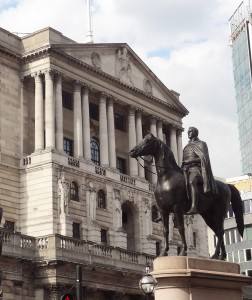
A salutary lesson is to look back at previous forecasts and see just how wrong they have been. The chart above shows the forecasts for GDP made in the Inflation Reports of Nov 2012 and Aug 2011. You can see that they are significantly different and yet just 15 months apart. You might also like to compare the forecasts made a year ago (or even two!) about 2012 with the actual situation today. A good source for this is the Treasury’s Forecasts for the UK economy. This collates the forecasts from a range of independent forecasters.
The inaccuracy of forecasting is an inevitable consequence of a highly interdependent world economy that is subject to a range of economic shocks and where confidence (or lack of it) is a major determinant of aggregate demand. But when firms, governments, individuals and central banks have to make plans, it is still necessary to project into the future and try to forecast as accurately as possible – even though it might mean keeping your fingers firmly crossed.
Articles
Bank of England downgrades growth forecast for 2013 Daily Record (14/11/12)
A gloomy picture from the Old Lady Financial Times (14/11/12)
Will Britain’s post-recession economy be resurgent, stagnant or greener? The Guardian, Larry Elliott (11/11/12)
Economics must heed political risk Financial Times, Sebastian Mallaby (6/11/12)
European Commission autumn forecast: overoptimistic and in denial Social Europe Journal, Andrew Watt (7/11/12)
Bank of England gets long to-do list for overhaul Reuters, Sven Egenter (2/11/12)
Data
Inflation Report, November 2012 Bank of England
Index of economic forecasts European Commission DGECFIN
Economic Outlook Annex Tables OECD
World Economic Outlook Reports IMF
Forecasts for the UK economy HM Treasury
Questions
- What was being forecast for economic growth and inflation for 2012 (a) one year ago; (b) two years ago?
- What are the main reasons for the inaccuracy of forecasts?
- How might forecasting be made more reliable?
- If sentiment is a key determinant of economic activity, how might politicians increase the confidence of firms and consumers? What are the political constraints on doing this?
- Explain the following statement from the Guardian article: “The problem … is that last decade’s tailwind has become this decade’s headwind.” Why is it difficult to forecast the strength of this ‘headwind’?
- How useful is it to use past trends as a guide to the future course of the economy?
At the start of the new decade, many commentators are getting out their crystal balls to take a look into the future. Below you will find a selection of their predictions, including six extracts from The Economist’s ‘The World in 2010’.
In 2009, the world economy shrank for the first time since 1945. Will it now bounce back, or will global recovery be slow, or will there be a ‘double-dip recession’ with output falling once more before sustained recovery eventally sets in? And what about particular economies? How will the UK fare compared with other countries? How will the USA and the eurozone perform? Will China and India be the powerhouses of global recovery?
Then there is the whole question of the financial sector. Is it now fixed? Will businesses and consumers have sufficient access to credit – is the credit crunch over? Has toxic debt been expunged from the banking system? Do banks now have sufficient capital?
And what about debt? Even though private-sector debt is falling in many countries as households and businesses scale back borrowing and as banks have imposed tighter lending criteria, public-sector debt is soaring around the world. Will financial markets continue to support these growing levels of sovereign debt? Will central banks have to continue with quantitative easing in order to support these levels of debt and to keep interest rates down?
Economic Outlook: 2010 may narrow gap Financial Times, Chris Flood (27/12/09)
CIPD Annual Barometer Forecast: UK economy to shed a further 250,000 jobs before unemployment peaks at 2.8 million in 2010 Chartered Institute of Personnel and Development (CIPD) (21/12/09)
Unemployment ‘set to peak in 2010’ Guardian (29/12/09)
Unemployment ‘will peak at 2.8m’ in 2010 BBC News (29/12/09)
What employment prospects lie ahead in 2010? BBC News, Shanaz Musafer (3/1/10)
Money printing scheme is working, Bank of England says Times Online, Gráinne Gilmore and Francesca Steele (1/1/10)
Bank optimism rises as credit to business eases Guardian, Ashley Seager (31/12/09)
The world in 2010: China continues its unstoppable economic charge Independent, Alistair Dawber (2/1/10)
The US slowly emerges from the gloom of 2009 Independent, Alistair Dawber (2/1/10)
Year dominated by weak dollar Financial Times, Anjli Raval (2/1/10)
A year when tipsters took a tumble Times Online, David Wighton (1/1/10)
PMEAC pegs growth at 8% in ’10-11 Times of India (2/1/10)
China and the other Brics will rebuild a new world economic order The Observer, Ashley Seager (3/1/10)
Five countries that crashed and burned in the credit crunch face a hard road to recovery The Observer, Heather Stewart, Ashley Seager, David Teather, Richard Wachman and Zoe Wood (3/1/10)
HSBC goes out on a limb and predicts growth beyond dreams of Chancellor Times Online, Gráinne Gilmore (2/1/10)
Uncertainty dogs sterling Financial Times, Peter Garnham (2/1/10)
A tough year to forecast as recovery hangs in the balance Scotsman, George Kerevan (30/12/09)
Unstable equilibrium in 2010 BBC News blogs, Peston’s Picks (30/12/09)
Intriguing economic questions for 2010 BBC News blogs, Stephanomics (23/12/09)
The hard slog ahead The Economist (13/11/09)
In the wake of a crisis The Economist (13/11/09)
Now for the long term The Economist, Matthew Bishop (13/11/09)
Recessionomics The Economist, Anatole Kaletsky (13/11/09)
The World in 2010: From the editor The Economist, Michael Pilkington (13/11/09)
The hard slog ahead The Economist (13/11/09)
For forecasts of various economies and regions see
World Economic Outlook (OECD)
European Economic Forecast – autumn 2009 (European Commission)
Tables set A and Tables set B from World Economic Outlook (IMF)
Questions
- What is likely to happen to the major economies of the world in 2010?
- How much reliance should be placed on macroeconomic forecasts for the medium term (1 or 2 years)?
- For what reasons might the UK economy fare (a) better or (b) worse than forecast?
- Why has unemployment risen less in the UK, and many other countries too, during the current recession compared to previous recessions? Does the flexibility of labour markets affect the amount that unemployment rises during a period of declining aggregate demand?
- Why may the world face a ‘long hard slog’ in recovering from recession?
- Why is the world in 2010 ‘balanced precariously’ and why are there huge uncertainties? (See Robert Peston’s blog.)
- Why are China and India likely to see much faster rates of economic growth than the USA, the EU and Japan?
- What is likely to happen to stock markets over the coming 12 months? What will be the main factors influencing the demand for and supply of shares?
- What fiscal and monetary policies are most appropriate during the coming 12 months?