 There have been a number of recent developments in communications markets that may significantly alter the competitive landscape. First, the UK Competition and Markets Authority (CMA) has provisionally cleared BT to takeover the EE mobile phone network. The deal will allow BT to re-establish itself as a mobile network provider, having previously owned O2 until it was sold in 2005. The CMA said that:
They operate largely in separate areas with BT strong in supplying fixed communications services (voice, broadband and pay TV), EE strong in supplying mobile communications services, and limited overlap between them in both categories of service.
BT will therefore be in a better position to compete with rivals such as Virgin Media who were early movers in offering.  Second, O2 itself (currently owned by Telefónica) is the subject of a takeover bid from Hutchinson Whampoa who already owns the mobile network Three. Because the companies meet their turnover criteria, this deal is being investigated by the European Commission (EC) and the signs don’t look good. If it goes ahead, it would create the largest mobile operator in the UK and leave just three main players in the market. The EC is concerned that the merger would lead to higher prices, reduced innovation and lower investment in networks. Previously, considerable consolidation in telecommunications markets across Europe has been allowed. However, recent evidence, including the prevention of a similar deal in Denmark, suggests the EC is starting to take a tougher stance.
If we compare the two proposed takeovers, it is clear that the O2–Three merger raises more concerns for the mobile communications market because they are both already established network providers.  However, it is increasingly questionable whether looking at this market in isolation is appropriate. As communication services become increasingly intertwined and quad-play competition becomes more prevalent, a wider perspective becomes more appropriate. Once this is taken, the BT–EE deal may raise different, but still important, concerns.
Finally, the UK’s communications regulator, OFCOM, is currently undertaking a review of the whole telecommunications market. It is evident that their review will recognise the increased connections between communications markets as they have made clear that they will:
 examine converging media services – offered over different platforms, or as a ‘bundle’ by the same operator. For example, telecoms services are increasingly sold to consumers in the form of bundles, sometimes with broadcasting content; this can offer consumer benefits, but may also present risks to competition.
One particular concern appears to be BT’s internet broadband network, Openreach. This follows complaints from competitors such as BSkyB who pay to use BT’s network. Their concerns include long installation times for their customers and BT’s lack of investment in the network. One possibility being considered is breaking up BT with the forced sale of its broadband network.
It will be fascinating to see how these communications markets develop over time.
BT takeover of EE given provisional clearance by competition watchdog The Guardian, Jasper Jackson (28/10/15)
Ofcom casts doubt on O2/Three merger BBC News, Chris Johnston (08/10/15)
BT and Openreach broadband service could be split in Ofcom review The Guardian, John Plunkett (16/07/15)
Questions
- What are the key features of communications markets? Explain how these markets have developed over the last few decades.
- What are the pros and cons for consumers of being able to buy a quad-play bundle of services?
- How do you think firms that are currently focused on providing mobile phone services will need to change their strategies in the future?
- Why is BT in a powerful position as one of the only owners of a broadband network?
- Instead of forcing BT to sell its broadband network, what other solutions might there be?
 After initial resistance, the brewer SAB Miller last week agreed to a merger with Anheuser-Busch InBev (AB InBev). The merging parties own over 400 brands between them. These include Budweiser, Stella Artois and Beck’s, which are owned by AB InBev, and Peroni and Grolsch by SAB Miller. Furthermore, they are currently the number one and two firms in the market respectively. If the merger goes ahead the new entity would control almost one third of global beer production.
This merger represents the continuation of AB InBev’s aggressive expansion plans through mergers and acquisitions as it follows its merger with Interbrew in 2004 and with InBev in 2008. It seems that one key attraction of a merger with SAB Miller is its dominant position in rapidly growing African markets.
A second motivation for the merger appears to be an attempt to counter the rise of small independent craft beer producers. For example, in the USA craft beer’s share of the market has grown from 5 to 11% since 2011. It has been suggested that the leading breweries combining forces represents one of several strategies being used to try to counter the threat of craft breweries. Additional strategies include creating their own craft products that are marketed as independant products and attempting to buy-up craft beer producers. For example, in 2011 AB InBev purchased the Goose Island brand.
Commenting on the planned merger between SAB Miller and AB InBev, a spokesman for the Campaign for Real Ale group expressed concern that:
independent beers may find it harder to get space in pubs and supermarkets because of the increased market presence of AB InBev.
Given the market positions of SAB Miller and AB InBev, it is likely that their merger will face considerable scrutiny by competition agencies in a number of jurisdictions. In fact it has been reported that plans have already been set in motion to sell SAB Miller’s interests in the USA to try to placate potential concerns from competition agencies in the USA and China.
Interestingly, SAB Miller has also protected itself by negotiating a clause that requires AB InBev to pay it $3bn if the deal falls through, for example on competition grounds. It remains to be seen what conditions competition authorities will require before the merger can go ahead and it is even possible they will try to completely block the deal.
Why beer drinkers lose in the SABMiller-AB InBev merger Fortune, John Colley (13/10/15)
Can craft beer survive AB InBev? The Budweiser maker’s acquisitions are unsettling the craft movement Bloomberg Business, Devin Leonard (25/06/15)
Questions
- How important do you think it is to consumers who a particular brand of beer is produced by?
- How serious a threat do you think independent craft beer producers are to the leading breweries?
- Outline some of the factors competition agencies will look at when they consider the merger between SAB Miller and AB InBev.
- Why might AB InBev have been willing to agree to pay a fee to SAB Miller in the event of the merger falling through?
 Deloitte recently published its 24th Annual Review of Football Finance and it contained some surprising results. Historically, most teams in the English Premier League (EPL) have made accounting losses with any increases in revenues being offset by higher wage costs. However, this report found that in 2013–14 most teams in the EPL actually made accounting profits.
The Deloitte’s review reported that the combined operating profits of clubs in the EPL increased from £82 million in 2012–13 to £614 million on 2013–14 – an enormous increase of 649%. Nearly all of the teams (19 out of 20) in the league made an operating profit while 14 also reported pre-tax profits. Dan Jones, head of Deloitte’s Sports Business Group, commented that:
“The change in club profitability in 2013–14 was more profound than anything we could have forecast.”
Why has the profitability of teams in the EPL suddenly improved so dramatically? One important factor was the significant increase in revenue. The combined income of the teams was £3.26 billion in 2013–14 – an increase of £735 million, or 29% on the previous year. Although match-day and commercial revenue both increased, the majority of this growth in income (nearly 80%) came from the sale of broadcast rights. The 2013–14 season was the first year of a new three-year contract that raised over £1.7 billion per year from the sale of these rights in both the UK and overseas.
However, clubs in the EPL have received big increases in revenue from TV deals before and still made substantial accounting losses. For example, the broadcasting contract that ran from 2010–13 generated over £1.1 billion per season – a £243 million per annum increase on the previous deal. Significantly, in the first year of this deal (2010–11), 81% of this increase in revenue went straight into higher player salaries, whereas in 2013–14 this figure was only 16%. The ratio of wages to turnover also fell from 71% in 2012–13 to 58% in 2013–14
So why did a smaller proportion of the increase in revenue go to the players compared with previous years? The explanation appears to be the impact of two new controls and regulations that were implemented by the EPL at the beginning of the 2013–14 season.
One of these has received considerable media attention and is similar to UEFA’s Financial Fair Play regulations. The Profitability and Sustainability Rules allow the clubs to make a maximum cumulative loss of £105 million over three seasons before having to face sanctions from the league. The size of the permissible loss is significantly higher than in the UEFA regulations.
The other control that has received far less attention is called Short-Term Cost Control (STCC). This regulation places limits on the extent to which clubs can increase their total wage bill. It operates from 2013–14 to 2015&ndash16: i.e. it covers the same three years as the current TV deal. For the 2013–14 season it worked in the following way.
If teams had a wage bill of less than £52 million they faced no restrictions on their spending on players’ salaries. Only Crystal Palace (£46 million) and Hull City (£43 million) fell into this category. Unsurprisingly, the five biggest spending clubs, Man Utd, Man City, Chelsea, Arsenal and Liverpool, had much greater wage bills of £215m, £205m, £192m, £166m and £144m respectively.
Any of the 18 teams that exceeded the £52m limit would still not face sanctions if their wage bill increased by £4 million or less. For example, Stoke City’s wage bill only increased from £60m to £61m, while Tottenham Hotspur’s increased from £96m to £100m. Some clubs actually managed to reduce their total wage bill, including the champions, Manchester City, which managed to lower its from £233m to £215m.
However, there were still 12 teams with a total wage bill that was greater than £52 million in 2013–14 and which had increased by more than £4 million on the previous year. For these teams not to face any sanctions, they had to prove to the EPL that any of the increase above £4 million was either due to player contracts entered into before January 2013 or could by financed from the following two sources.
• Club Own Revenue Uplift
• Profit from player transfers
Whereas the profit from player transfers is straightforward, the ‘Club Own Revenue Uplift’ requires some explanation, as it excludes a very important part of teams’ incomes – Central Fund payments.
Some revenues earned by clubs in the EPL are referred to as ‘Central Fund payments’. These are, in effect, income payments from money that is raised centrally by the EPL on behalf of the clubs and then distributed to the teams using an agreed formula. The majority of the revenue generated under this category is from the broadcast deals, although some commercial income, such as the sponsorship of the league, also falls under this category. For some teams the money raised from Central Fund payments makes up the majority of their revenue.
‘Club Own Revenue’ in STCC calculations refers to all revenues other than those from Central Fund payments. This includes a number of income streams that the club has more direct control over. They include:
• Gate money/other match-day revenue
• Commercial deals negotiated by the individual club
• Income from playing in European competitions, including TV revenue.
The uplift refers to increases in revenue from these sources compared to 2012–13.
For example, assume a club has made no profit from its transfer dealing and did not enter into any significant player contracts prior to January 2013. If this club’s wage bill increased from £100m in 2012–13 to £110m in 2013–14 then it would have to provide evidence to show that £6m of this increase could be financed from growth in its Club Own Revenue. In other words, it would have to demonstrate how its income from gate money, commercial deals and playing in Europe was at least £6m higher in 2013–14 than it had been in 2012–13.
It will be interesting to see if (1) the profitability of the clubs continues to improve in future years and (2) the STCC regulations are extended when the new broadcast deal comes into effect in 2016–17.
The EPL Proves Cost Control Works The Judge 13 (4/6/15)
English Premier League clubs made more revenue than Spain and Italy’s clubs combined UK Business Insider, Lianna Brinded (4/6/15)
Premier League football club revenues and profits soar BBC News, Bill Wilson (4/6/15)
Deloitte Premier League list: Clubs’ revenue boom to £3.3billion as Tottenham record highest ever pre-tax profits after Gareth Bale transfer The Independent, Joanna Bourke (4/6/15)
Annual Review of Football Finance 2015 Premier League clubs generate over £3bn revenue in season of records Deloitte (4/6/15)
Premier League top of the rich list with record income of £3.26bn The Guardian, David Conn (4/6/15)
Questions
- What is the difference between an operating profit and a pre-tax profit?
- If a club reports that it is making an accounting profit, does this mean that it must be making an economic profit? Explain your answer.
- Give some examples of the economic costs of running a football club that might not be included in accounting calculations of profit.
- How is the profit/loss from player transfers calculated?
- Explain why the current rules may give teams that play in European competitions a competitive advantage.
 New Look was founded in 1969 and is an iconic budget retailer found on most British high streets. In its history, it has been a family business; it has been listed on the London stock exchange; returned to a private company and then had the potential to be re-listed. Now, it is moving into South African ownership for £780 million.
90% of New Look will now be owned by Christo Wiese who controls Brait and who has been linked with other take-overs of British retailers in recent years. The remaining 10% will remain in the hands of the founding family. The company has been struggling for some time and in 2010 did have plans to relist the company on the London Stock Exchange. However, volatile market conditions meant that this never occurred and the two private equity firms, Apax and Permira, appeared very eager to sell. New Look’s Chairman, Paul Mason, said:
“This is an ideal outcome for New Look. The Brait team demonstrated to us that they have the long-term vision to help Anders and the team grow this brand.”
It is not yet clear what this move will mean for the retailer, New Look, but with an estimated £1 billion debt, it is expected that changes will have to be made. 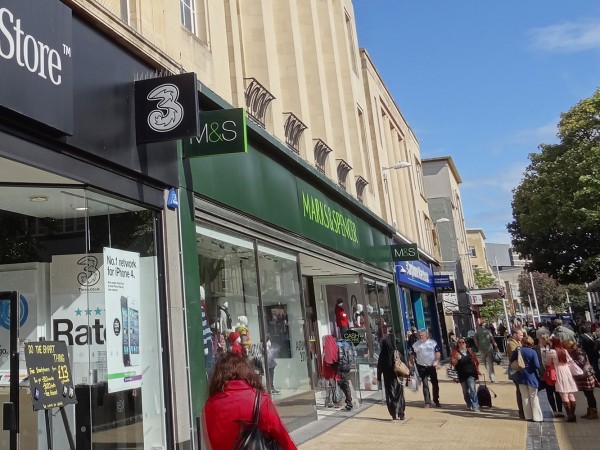 It is certainly an attractive investment opportunity and New Look does have a history of high rates of growth, despite its current debt. Furthermore, the debt levels are likely to have helped Mr. Wiese obtain a deal for New Look. Fashion retailing is a highly competitive market, but demand always appears to be growing. It is still relatively ‘new’ news, so we will have to wait to see what this means for the number of stores we see on the high streets and the number of jobs lost or created. The following articles consider this new New Look.
South African tycoon buys New Look fashion retailer BBC News (15/5/15)
South African tycoon enters UK retail fray with New Look purchase Financial Times, Andrea Felsted, Clare Barrett and Joseph Cotterill (15/5/15)
New Look snapped up by South African tycoon The Guardian, Sean Farrell (15/5/15)
New Look sold to South African billionaire for £780m The Telegraph, Elizabeth Anderson and Andrew Trotman (15/5/15)
Questions
- Why might a company become listed on the London stock exchange?
- How would volatile economic circumstances affect a company’s decision to become listed on the stock market?
- What do you think this purchase will mean for the number of New Look stores on British high streets? Do you think there will be job losses or jobs created by this purchase?
- How do you think the level of New Look’s debt affected Christo Wiese’s decision to purchase New Look?
- Which factors are likely to affect a firm’s decision to take-over or purchase another firm?
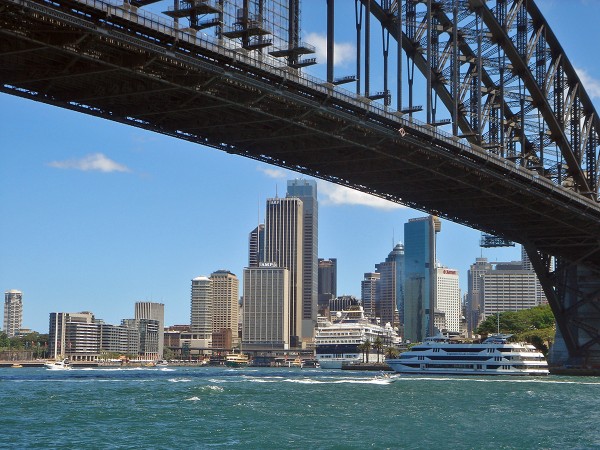 Many of the major industries in Australia are oligopolies/oligopsonies. Examples include banking, telecoms, supermarkets, insurance and iron ore. The dominant firms in these markets have been accused of exploiting their market power, both in charging high prices to consumers and driving down the prices paid to suppliers. The result, it is claimed, is that they have been making excessive profits.
But things may be changing. With the rise of online trading, barriers to entry in these markets have been falling. Many of the new entrants are established firms in other countries and hence already have economies of scale.
The first article below examines the challenge to established oligopolists in Australia.
Articles and blogs
The death of the oligopoly: Australia’s incumbents face new rivals Financial Review (Australia), Michael Smith (21/4/15)
Australian Oligopolies The Grapevine, Adam Dimech (27/12/14)
Paper
Breaking up Australia’s oligopolies Ashurst Australia (14/8/13)
Questions
- Find out which are the major firms in Australia in the five industries identified above. What is their market share and how has this been changing?
- What barriers to entry exist in each of these industries in Australia? To what extent have they been declining?
- What can new entrants do to overcome the barriers to entry?
- What technological developments allow other companies to challenge Foxtel’s pay television monopoly?
- To what extent are developments in the supermarket industry in Australia similar to those in the UK?
- To what extent does Australia benefit from increased globalisation?
 Second, O2 itself (currently owned by Telefónica) is the subject of a takeover bid from Hutchinson Whampoa who already owns the mobile network Three. Because the companies meet their turnover criteria, this deal is being investigated by the European Commission (EC) and the signs don’t look good. If it goes ahead, it would create the largest mobile operator in the UK and leave just three main players in the market. The EC is concerned that the merger would lead to higher prices, reduced innovation and lower investment in networks. Previously, considerable consolidation in telecommunications markets across Europe has been allowed. However, recent evidence, including the prevention of a similar deal in Denmark, suggests the EC is starting to take a tougher stance.
 However, it is increasingly questionable whether looking at this market in isolation is appropriate. As communication services become increasingly intertwined and quad-play competition becomes more prevalent, a wider perspective becomes more appropriate. Once this is taken, the BT–EE deal may raise different, but still important, concerns.