 The housing market and what to do about bubbles, second homes and first time buyers is likely to be one of many battle grounds at the next election. For many years, the idea of a mansion tax has been debated and the Shadow Chancellor, Ed Balls, has outlined plans for a mansion tax under a Labour government.
The policy would see houses valued at between £2 and £3 million pay £250 a month as a mansion tax. Those owning a home worth tens of millions and those with second homes would pay more under the mansion tax, which would be based on a progressive system. Concerns have been raised about the impact of this tax on home-owners in areas like London, where average house prices are considerably higher than the UK average. Ed Balls has sought to reassure homeowners that payment of the mansion tax could be deferred if earnings do not reach the £42,000 threshold. However, critics have suggested that this policy will only make things worse for middle income households who will not be able to defer such a payment if their income is £43,000. Labour’s MP for Greenwich, Nick Raynsford said, ‘What it does is create a cliff edge. It will still hit people who are asset rich but cash poor.” Writing in the Evening Standard, Ed Balls said:
“Long-standing residents who now find themselves living in high-value homes but do not have an income high enough to pay the higher or top rate of income tax — in other words earn less than £42,000 a year — will be guaranteed the right to defer the charge until the property changes hands.
So a tax on the highest value properties will be done fairly and carefully to help fund our NHS for the future.
Ordinary Londoners should be protected and wealthy foreign investors must finally make a proper tax contribution in this country.”
Although similar in its objective to the Liberal Democrat’s mansion tax, the amount of the tax as a percentage of the value of the home under Labour is significantly lower. It is likely to be between 0.1% and 0.15% of the home’s valued, compared to the 1% levy proposed by the Liberal Democrats.
 One debate now surrounds the amount that this tax is expected to raise, especially given the revenue has been ear-marked to finance the NHS. The number of homes whose value is estimated to fall between £2m and £3m varies considerably and hence so would the revenues raised from such a tax. However, the income generated by even the most generous estimates will not come close to raising the ear-marked figure of £1.2bn. As such, there are suggestions that the tax levied on houses worth more than £3m; on foreign owners of residences in the UK and second homes will need to be significant to make up the short fall. A spokesperson for the Conservatives said:
“Serious questions have now been raised about how much revenue Labour would be able to raise from the tax …This is a further unravelling of the policy, which faced fierce criticism after it was revealed that no money would be raised until halfway through the next parliament, and the proposals for mass valuations of family homes was widely slammed as unworkable.”
The UK residential research director of Savills estate agency, Lucian Cook, added:
“Given Labour’s stated ambition to raise £1.2bn, that would leave at least £1.08bn to be raised from the remaining 57,000 properties, possibly more to account for tax leakage elsewhere in the system.”
The impact of the mansion tax will depend on exactly how it is imposed and the thresholds, together with how the threshold changes with the housing market. In the UK, we have seen some houses increase in value by huge amounts in just a few months and with a mansion tax, any such increase in price could move more home-owners into the new progressive tax system. Some argue that it is a tax on Londoners. The following articles consider the proposed policy by Labour.
Ed Balls seeks to reassure London home owners over mansion tax plans The Guardian, Patrick Wintour (20/10/14)
Ed Balls: Mansion tax would start at £250 a month BBC News (20/10/14)
‘Mansion tax’ will mean bill of £250 a month, says Ed Balls Financial Times, Emily Cadman, Kate Allen, Vanessa Houlder and George Parker (20/10/14)
Mansion tax can be deferred in you earn less than £42,000, Ed Balls insists as he reveals details of levy on £2million homes Mail Online, Matt Chorley (20/10/14)
Ed Balls: Mansion tax will cost homeowners £250 a month London Evening Standard (20/10/14)
Middle-class families hit by Labour’s mansion tax The Telegraph, Steven Swinford (20/10/14)
Balls says mansion-tax threshold to rise with home values Bloomberg, Svenja O’Donnell (20/10/14)
Questions
- How does a progressive tax system work?/li>
- Why are some critics arguing that this mansion tax would just be a tax on Londoners?
- What objective is the £42,000 income threshold trying to achieve? Do you think that critics are correct in their assertion that it penalises middle income households?
- Fiscal drag is mentioned in the BBC News article as a potential problem with the mansion tax proposed by Labour and that houses may move into the taxable threshold. What is fiscal drag and why is it a potential concern?
- How might such a policy affect the incentives of foreigners to invest in the UK housing market? Would this be a good or a bad thing and for who?
- The revenues generated from houses between £2 and £3m will not be sufficient to generate £1.2bn. What are the implications for how progressive the mansion tax would need to be and how this might affect homeowners?
 Europe’s largest economy is Germany and the prospects and growth figures of this country are crucial to the growth of the Eurozone as a whole. The EU is a key trading partner for the UK and hence the growth data of Germany and in turn of the Eurozone is also essential in creating buoyant economic conditions within our borders. The bad news is that the economic growth forecast for Germany has been cut by the German government.
The German government had previously estimated that the growth rate for this year would be 1.8%, but the estimate has now been revised down to 1.2% and next year’s growth rate has also been revised downwards from 2% to 1.3%. Clearly the expectation is that low growth is set to continue.
Whenever there are changes in macroeconomic variables, a key question is always about the cause of such change, for example is inflation caused by demand-pull or cost-push factors. The German government has been quick to state that the lower growth rates are not due to internal factors, but have been affected by external factors, in particular the state of the global economy. As such, there are no plans to make significant changes to domestic policy, as the domestic economy remains in a strong position. The economy Minister said:
“The German economy finds itself in difficult external waters … Domestic economic forces remain intact, with the robust labour market forming the foundation … As soon as the international environment improves, the competitiveness of German companies will bear fruit and the German economy will return to a path of solid growth … [for this reason there is] no reason to abandon or change our economic or fiscal policy.”
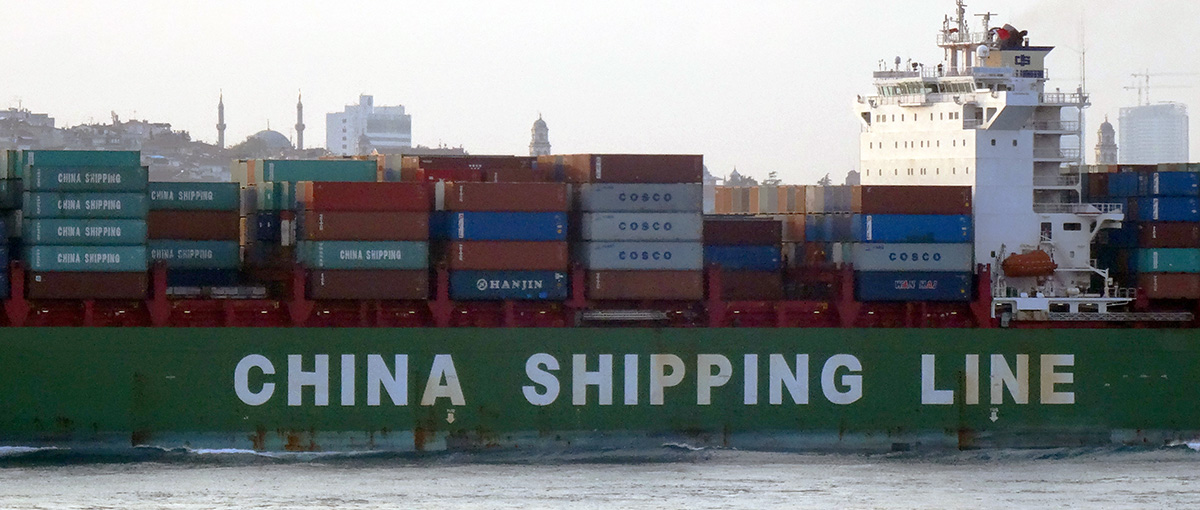
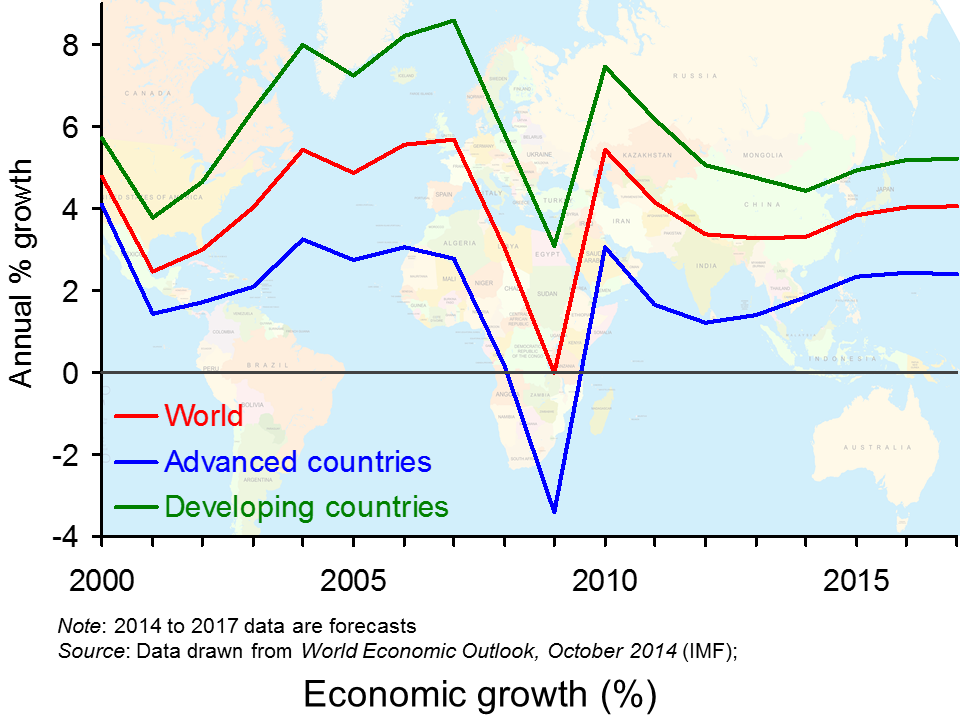 The global picture remains relatively weak and while some economies, including the UK, have seen growth pick up and unemployment fall, there are concerns that the economic recovery is beginning to slow. With an increasingly interdependent world, the slowing down of one economy can have a significant impact on the growth rate of others. If country A begins to slow, demand for imports will fall and this means a fall in the demand for exports of country B. For countries that are dependent on exports, such as Germany and China, a fall in the demand for exports can mean a big decline in aggregate demand and in August, Germany saw a 5.8% drop in exports.
Adding to the gloom is data on inflation, suggesting that some other key economies have seen falls in the rate of inflation, including China. The possibility of a triple-dip recession for the Eurozone has now been suggested and with its largest economy beginning to struggle, this suggestion may become more real. The following articles consider the macroeconomic picture.
Articles
Germany cuts growth forecasts amid recession fears, as Ireland unveils budget The Guardian, Graeme Wearden (14/10/14)
As cracks in its economy widen, is Germany’s miracle about to fade? The Observer, Philip Oltermann (19/10/14)
Why the German economy is in a rut The Economist (21/10/14)
Germany’s flagging economy: Build some bridges and roads, Mrs Merkel The Economist (18/10/14)
Germany cuts 2014 growth forecast from 1.8% to 1.2% BBC News (14/10/14)
IMF to cut growth forecast for Germany – der Spiegel Reuters (5/10/14)
Fears of triple-dip eurozone recession, as Germany cuts growth forecast The Guardian, Phillip Inman (15/10/14)
Germany slashes its economic forecasts Financial Times, Stefan Wagstyl (14/10/14)
 Merkel vows austerity even as growth projection cut Bloomberg, Brian Parkin, Rainer Buergin and Patrick Donahue (14/10/14)
Is Europe’s economic motor finally stalling? BBC News, Damien McGuinness (17/10/14)
Why Germany won’t fight deflation BBC News, Robert Peston (16/10/14)
Data
World Economic Outlook Database IMF (15/10/14)
World Economic Outlook IMF (October 2014)
Questions
- How do we measure economic growth and is it a good indicator of the state of an economy?
- What are the key external factors identified by the Germany government as the reasons behind the decline in economic growth?
- Angela Merkel has said that austerity measures will continue to balance the budget. Is this a sensible strategy given the revised growth figures?
- Why is low inflation in other economies further bad news for those countries that have seen a decline or a slowdown in their growth figures?
- Why is interdependence between nations both a good and a bad thing?
- Using AS and AD analysis, illustrate the reasons behind the decline German growth. Based on your analysis, what might be expected to happen to some of the other key macroeconomic variables in Germany and in other Eurozone economies?
 In two posts recently, we considered the pessimistic views of Robert Peston about the prospects for the global economy (see Cloudy skies ahead? and The end of growth in the West?). In this post we consider the views of Christine Lagarde, Managing Director of the International Monetary Fund, and Lord Adair Turner, the former head of the Financial Services Authority (FSA) (which was replaced in 2013 by the Financial Conduct Authority and the Prudential Regulation Authority).
Christine Lagarde was addressing an audience at Georgetown University in Washington DC. The first four links below are to webcasts of the full speech and subsequent interviews about the speech. She gives a more gloomy assessment of the global economy than six months ago, especially the eurozone economy and several emerging economies, such as China. There are short- to medium-term dangers for the world economy from political conflicts, such as that between Russia and the West over Ukraine. But there are long-term dangers too. These come from the effects of subdued private investment and low infrastructure spending by governments.
Her views are backed up by the six-monthly World Economic Outlook, published by the IMF on 7 October. There are links below to two webcasts from the IMF discussing the report and the accompanying datasets.
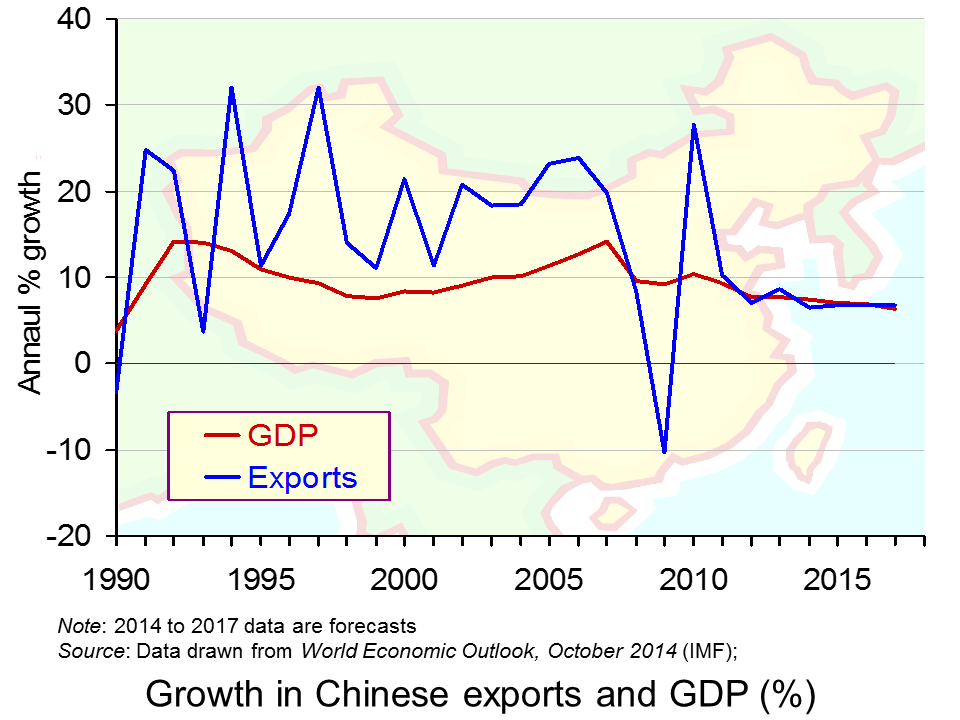 In the final webcast link below, Lord Turner argues that there is a “real danger of a simultaneous slowdown producing a big setback to growth expectations.” He is particularly worried about China, which is experiencing an asset price bubble and slowing economic growth. Other emerging economies too are suffering from slowing growth. This poses real problems for developed countries, such as Germany, which are heavily reliant on their export sector.
Webcasts
The Challenges Facing the Global Economy: New Momentum to Overcome a New Mediocre IMF Videos, Christine Lagarde (full speech) (2/10/14)
Christine Lagarde downbeat on global economy BBC News Canada, Christine Lagarde interviewed by Katy Kay (2/10/14)
IMF’s Lagarde on Global Economy, Central Banks Bloomberg TV, Christine Lagarde interviewed by Tom Keene (2/10/14)
Lagarde: Global economy weaker than envisioned 6 months ago, IMF to cut growth outlook CNBC (2/10/14)
IMF Says Uneven Global Growth Disappoints IMF Videos, Olivier Blanchard (7/10/14)
Time Is Right for an Infrastructure Push IMF Videos, Abdul Ablad (30/9/14)
China slowdown poses ‘biggest risk to global economy’ The Telegraph, Adair Turner (4/10/14)
Articles
Global Growth Disappoints, Pace of Recovery Uneven and Country-Specific IMF Survey Magazine (7/10/14)
Global economy risks becoming stuck in low growth trap The Telegraph, Szu Ping Chan (2/10/14)
American Exceptionalism Thrives Amid Struggling Global Economy Bloomberg, Rich Miller and Simon Kennedy (4/10/14)
World Bank cuts China growth forecast for next three years BBC News (6/10/14)
Beware a Chinese slowdown The Guardian, Kenneth Rogoff (6/10/14)
IMF says economic growth may never return to pre-crisis levels The Guardian, Larry Elliott (7/10/14)
IMF goes back to the future with gloomy talk of secular stagnation The Guardian, Larry Elliott (7/10/14)
Data
World Economic Outlook Database IMF (7/10/14)
World Economic Outlook IMF (October 2014)
Questions
- What are the particular ‘headwinds’ facing the global economy?
- Why is the outlook for the global economy more pessimistic now than six months ago?
- Why are increasing levels of debt and asset price rises a threat to Chinese economic growth?
- Why may China be more able to deal with high levels of debt than many other countries?
- In what ways are commodity prices an indicator of the confidence of investors about future economic growth?
- What are the determinants of long-term economic growth? Why are potential economic growth rates lower today than in the 2000s?
- How might governments today boost long-term economic growth?
- What are the arguments for and against governments engaging in large-scale public investment in infrastructure projects? What would be the supply-side and demand-side effects of such policies?
- If confidence is a major determinant of investment, how might bodies such as the IMF boost confidence?
- Why does the IMF caution against over-aggressive attempts to reduce budget deficits?
 Now here’s a gloomy article from Robert Peston. He’s been looking at investors’ views about the coming years and sees a general pessimism about the prospects for long-term economic growth. And that pessimism is becoming deeper.
It is true that both the UK and the USA have recorded reasonable growth rates in recent months and do seem, at least on the surface, to be recovering from recession. But, according to investor behaviour, they:
seem to be saying, in how they place their money, that the UK’s and USA’s current reasonably rapid growth will turn out to be a short-lived period of catch-up, following the deep recession of 2008-9.
So what is it about investor behaviour that implies a deep pessimism and are investors right to be pessimistic? The article explores these issues. It does also look at an alternative explanation that investors may merely be being cautious until a clearer picture emerges about long-term growth prospects – which may turn out to be better that many currently now predict.
The article finishes by looking at a possible solution to the problem (if you regard low or zero growth as a problem). That would be for the government to ‘throw money at investment in infrastructure – to generate both short-term growth and enhance long-term productive potential.’
Note that Elizabeth also looks at this article in her blog The end of growth in the west?.
The end of growth in the West? BBC News, Robert Peston (26/9/14)
Questions
- What is meant by the ’25-year yield curve for government bonds’? Why does this yield curve imply a deep level of business pessimism about the long-term prospects for UK economic growth?
- What are the determinants of long-term economic growth?
- Looking at these determinants, which ones suggest that long-term economic growth may be low?
- Are there any determinants which might suggest that economic growth will be maintained over the long term at historical levels of around 2.6%?
- Do demand-side policies affect potential GDP and, if so, how?
- What policies could government pursue to increase the rate of growth in potential GDP?
- What current ‘dramas’ affecting the world economy could have long-term implications for economic growth? How does uncertainty about the long-term implications for the global economy of such dramas itself affect economic growth?
- Is long-term growth in real GDP an appropriate indicator of (a) economic development and (b) long-term growth in general well-being?
 The growth rates of the Western world have been somewhat volatile for the past decade, with negative growth sending economies into recession and then varying degrees of economic recovery. Growth rates elsewhere have been very high, in particular in countries such as China and India. The future of economic growth in the west is hotly debated and whether the western world has been forever changed by the credit crunch remains to be seen.
The article below from the BBC, written by Robert Peston, the Economics Editor, addresses the question of the future of the western world. Opinions differ as to whether the west is finally recovering from the recession and financial instability or if the credit crunch and subsequent recession is just the beginning of many years of economic stagnation. The article in particular focuses on the yield curve and the trends in government debt or gilts. This tends to be a key indicator of the expectations of the future of an economy and how confident investors are in its likely trajectory. Though technical in places, this article provides some interesting stances on what we might expect in the coming 2-3 decades for economic performance in the West.
Note that John also looks at this article in his blog Cloudy Skies Ahead?
The end of growth in the West? BBC News, Robert Peston (26/9/14)
Questions
- Which factors affect the economic growth of a nation?
- Confidence from consumers, firms and investors is always argued to be crucial to the future economic growth and in many cases, the recovery of an economy. Explain why this factor is so important.
- What is the yield curve and what does it show?
- How can the yield curve be used to offer predictions about the future strength of an economy?
- Why are governments seen as the safest place to lend?
- If Larry Summers is correct in saying that it is a negative equilibrium interest rate that is needed to generate full employment growth, what does this suggest about the future economic performance of the western world?
- In the article, there is a list of some of the key things that make investors anxious. Review each of these factors and explain why it is so important in generating anxiety.